

Welcome to your weekly no-BS briefing on AI search. See what changed, learn what’s working, and get new ideas to steal, all in 5 minutes. Let’s goooo 🚀
In today’s edition:
🍼 How Pampers went to #1 in AI answers
💳 ChatGPT gets a wallet, and schools may quit Google
🧪 Check what your page says that AI doesn’t
🚗 How a car club became America’s hotel inspector
Mention worthy
🍼 Brands are paying a publisher to show up in AI answers
When a product changes, most companies update their own website and hope AI catches up. Pampers had a parenting site explain the change for it.
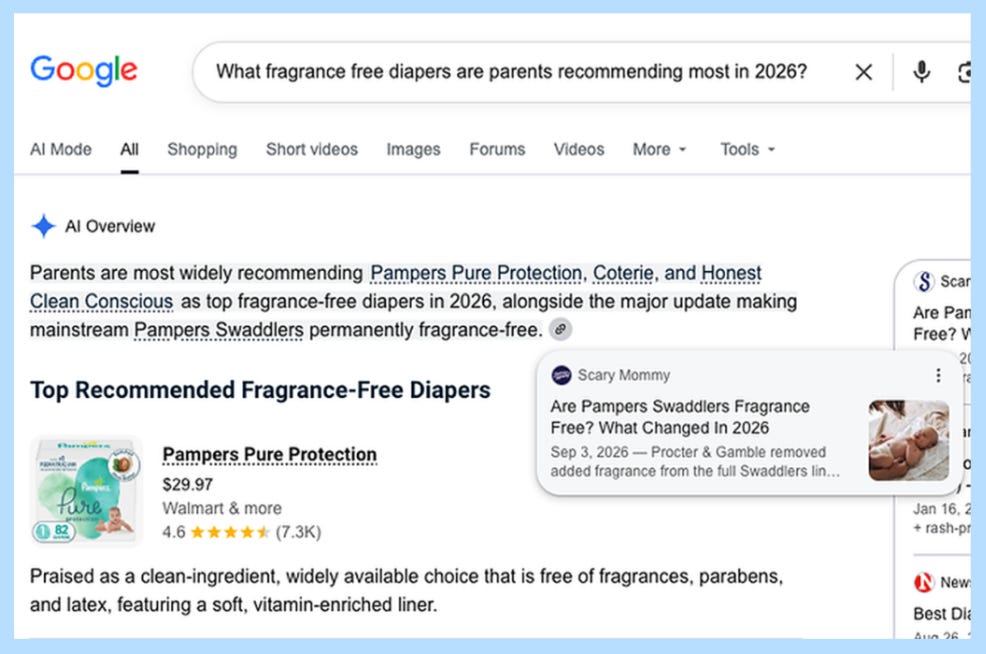
Bustle Digital Group, the publisher of Bustle and Scary Mommy, sells an offering it calls ECHO, Digiday reports. It uses Profound's AI visibility data to see which sites AI cites in a brand's category. AI agents draft the briefs, and BDG's editors write the articles.
BDG's case study says Pampers went from #2 to #1 for fragrance-free diaper questions after a Scary Mommy explainer. Innisfree's visibility rose 30% across 200 skincare prompts.
Why it works
👉 It goes after facts AI has wrong. Pampers’ Swaddlers went fragrance-free in June, but AI tools kept describing the old version, Profound says. BDG found the sources those tools were using, then published an explainer with the new details.
👉 The advertiser stays out of the writing. BDG’s Graham Howes says advertisers have no hand in the creative, partly because heavy-handed advertorial is unlikely to be cited.
👉 Reddit gets a paid push. BDG promotes the articles on Reddit, which Howes says is still a significant source of AI citations.
💡 Steal this: update what AI knows about you
Ask ChatGPT what your product costs, what it includes and what's changed this year. For an accounting firm, it might list a service you've dropped. For a software company, an old pricing tier.
Note each wrong answer and the source it links to. Publish a short, dated explainer of what changed, then send it to that source's editor, so the correction sits where AI looks.
Our partner
🎙️ Explain it out loud. Wispr Flow writes it up.
Wispr Flow turns speech into polished writing in any app. Explain your latest product change the way you'd tell a customer, and you've got the first draft ready to go. Flow removes filler words, adds punctuation, and learns your vocabulary.
It's about 4x faster than typing, works in 100+ languages and runs on Mac, Windows, iPhone and Android.
Industry news
🗞️ AI search stories that matter this week
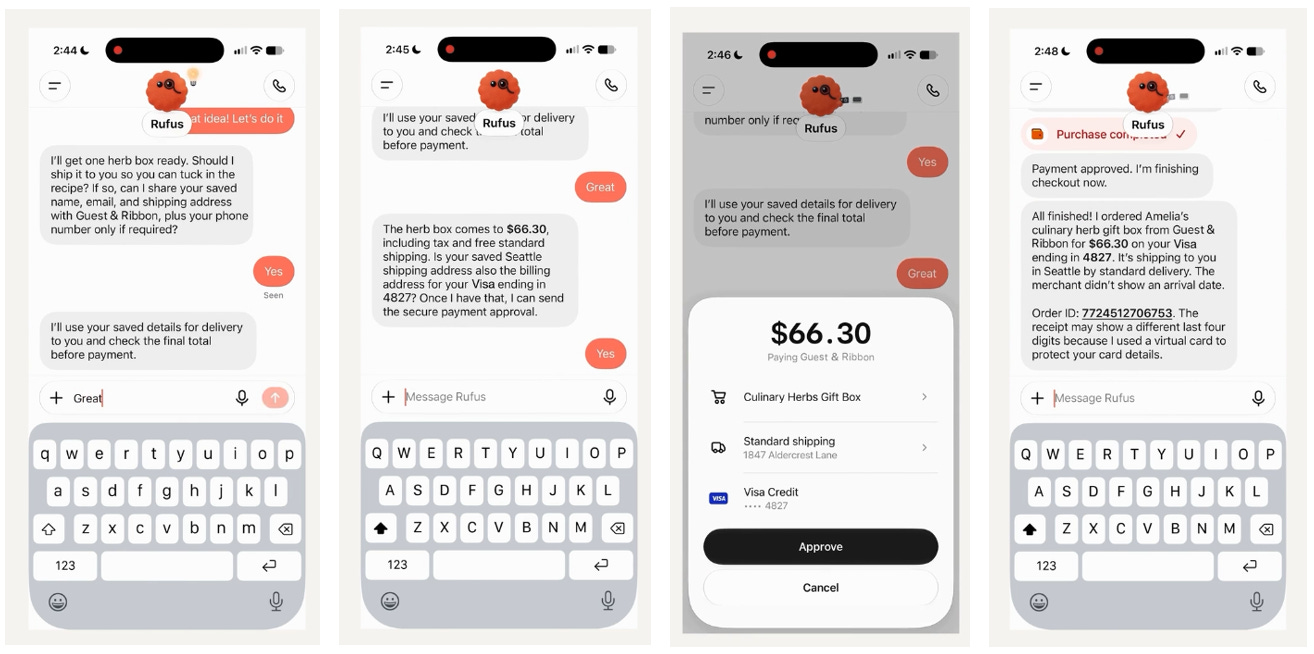
1. ChatGPT's agents can now pay at the checkout. OpenAI launched ChatGPT Wallet on 13 November with American Express, Mastercard and Visa, for some US Pro subscribers. Its agents, called dots, can buy once you approve each purchase with Face ID or a fingerprint. OpenAI's advice to sellers: upload a product feed with current prices and stock, and check your firewall lets its agents in.
2. America's biggest school districts may drop Google Search. New York City, Los Angeles and Chicago are weighing other search engines after Google refused to give students a version of Search without AI, Digital Trends reports. Bing and DuckDuckGo already let schools turn AI answers off, so check how your business shows up in Bing.
3. Anthropic has paid a news publisher for the first time. Two people familiar with the deal told Adweek that Anthropic licensed Associated Press content and data shortly before the US midterms. On election night, Claude showed live polling updates credited to the AP. Date and sign your own data, so anyone quoting it knows who to credit.
Quick hits
💰 Perplexity passes a $1 billion annual run rate. CEO Aravind Srinivas announced it at a Semafor event earlier this week, and told CNBC he wouldn't rule out filing for an IPO in early 2027. Add Perplexity to the AI tools you check your brand in.
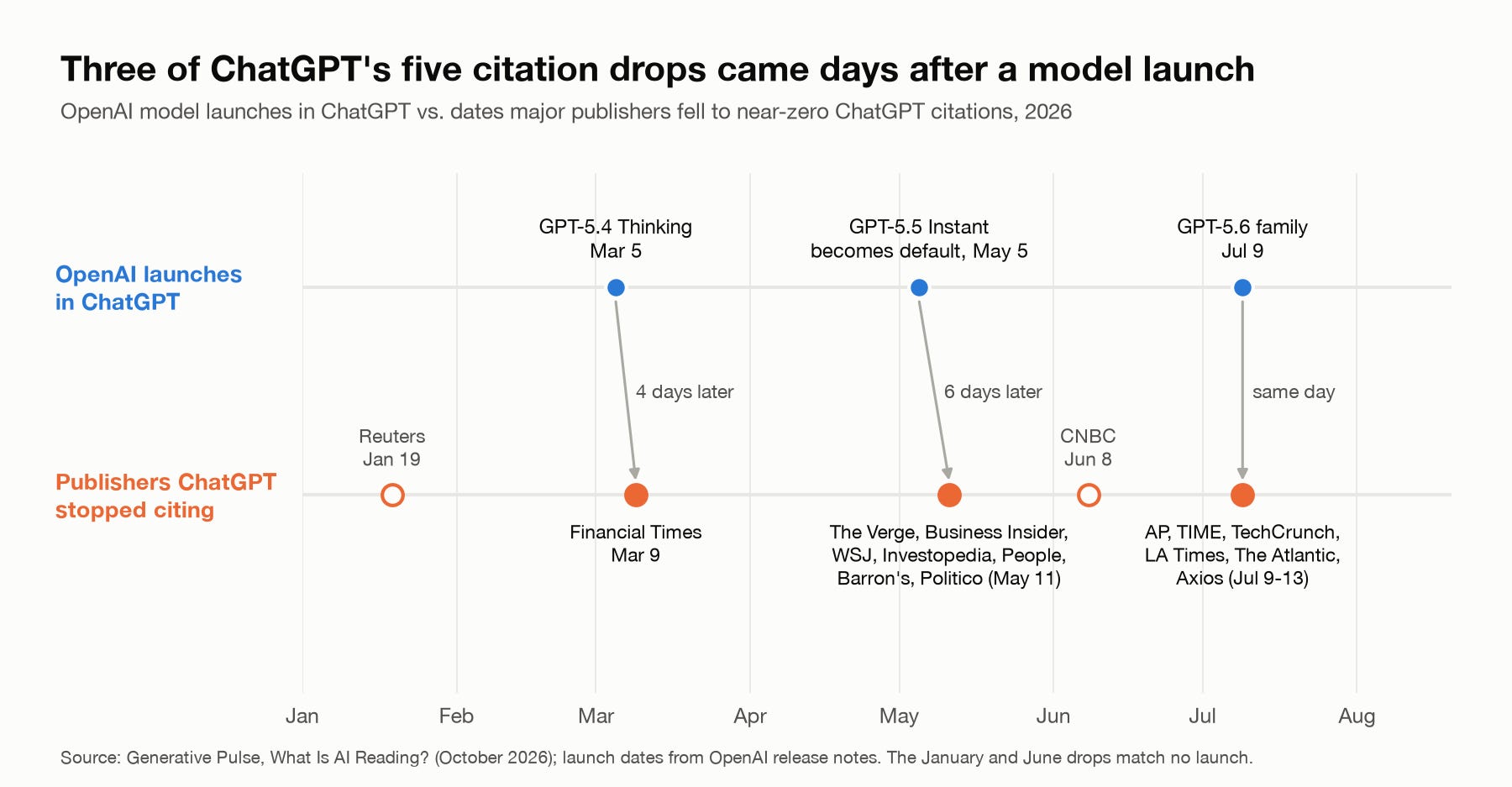
📉 ChatGPT’s citations to major publishers fell by up to 90% around the GPT-5.6 launch. Their Google rankings stayed stable, Search Engine Land reports. Press coverage can stop being cited without warning, so get named across press, reviews, communities and your own site.
Try this
🧪 The what-only-you-know test
Pick the page you most want buyers to find, such as your main service page. Then check what it adds beyond what AI already knows. Open a temporary chat in ChatGPT and paste this:
Without searching the web, answer this in 150 words: [the main question that page answers]
Compare the answer with your page. Highlight every line of yours that ChatGPT missed, such as your numbers, tests, customer stories and opinions.
No highlights means your page repeats what AI already knows. Google has a name for what’s missing 👇
Buzzwords of the week
🗣️ Non-commodity content
Non-commodity content is content built on things only you have, such as your data, tests, customer stories and judgment.
The phrase comes from Google’s guide to optimising for generative AI features, which tells site owners to write it. Google gives two examples. Commodity content: “7 Tips for First-Time Homebuyers”. Non-commodity content: “Why We Waived the Inspection & Saved Money: A Look Inside the Sewer Line”.
💡 My take: it's an old idea with a new label. Before you publish, add one thing a competitor couldn't: a number from your records or a test you ran.
Steal this playbook
📘 Kevin Indig: what 52 studies say about AI search
Kevin Indig’s AI Search Meta Analysis, out 16 November, reviews 52 studies on how people use AI search. In one experiment, clicks to websites fell by 39.8% when Google showed an AI Overview.
Three bits worth stealing:
👉 Answer the follow-up questions. In AirOps data, a third of cited pages that appeared in a top-20 search result surfaced only through a follow-up search ChatGPT ran itself. Asking about the best CRM can trigger searches on pricing and integrations, so answer those too.
👉 Put your brand name in the quotable lines. In Indig’s study with Semrush, 61.7% of 3,981 domain appearances were citations with no brand mention. He calls these ghost citations: AI links to your page without naming you.
👉 Publish your prices. In a test of 100 B2B products, Claude agents researching pricing cited a third-party source in 45% of runs when the price wasn’t public, against 18% when it was.
And the one to remember: 85% of pages ChatGPT retrieved were never cited, in AirOps’ data. Getting found is only the first hurdle, so track mentions, citations, visits and leads as separate results.
Before the bots
🚗 How AAA became America's hotel inspector
In 1902, America had about 23,000 cars and 17 million horses. On 4 March that year, nine motor clubs met in Chicago and formed the American Automobile Association.
Five years later, AAA set up a touring bureau to tell members about roads and hotels. Its own maps and TourBook guides followed.
In 1937, it began sending inspectors to hotels and restaurants. In 1976, those ratings became the Diamond Rating System. AAA now has more than 66 million members.
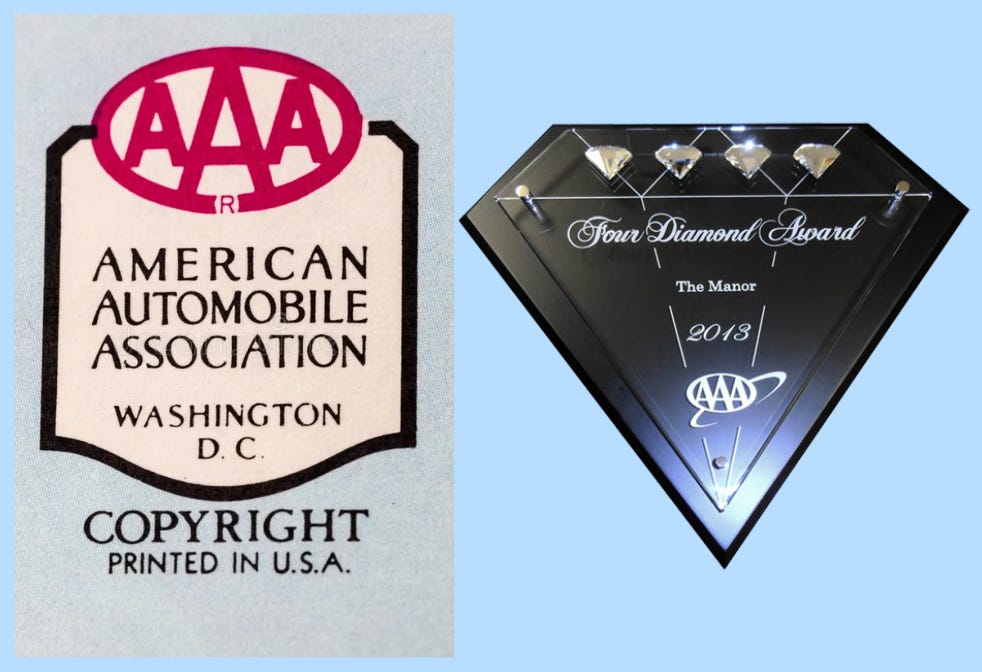
💡 The lesson for 2026: AAA built its authority by inspecting places itself and publishing a simple rating.
When a buyer asks AI for a recommendation, the answer draws on sources that have already compared the options. A source that has tested each one and shown its scoring gives AI something specific to quote.
👉 Your move: be the inspector in your niche. Test the options your buyers compare, such as booking software for physiotherapy clinics. Score each on the same five checks, then publish your method with a date.
See you next week 🚀
Sam
Your feedback helps me create better briefings for you!
P.S. BDG's explainers sit in the second pillar of The Mention Method: third-party authority, through press and communities like Reddit. Want to see what AI gets wrong about your business, and where it got it? Reply "Method" and I'll walk you through it.
P.P.S. Worth a quick read: Learn how founders use LinkedIn to boost AI search visibility in 2026.