

Welcome to your weekly no-BS briefing on AI search. See what changed, learn what’s working, and get new ideas to steal, all in 5 minutes. Let’s goooo 🚀
In today’s edition:
🎸 Why Fender rebuilt its website around stories
💸 ChatGPT ads underdeliver, and AI Mode adds booking links
🧪 A two-minute test of how AI tells your story
💎 How four words made diamonds the default
Mention worthy
🎸 Fender rebuilt its website to tell its story
Most brand websites exist to sell. Fender decided its site also had to explain why its guitars matter and help players pick the right one.
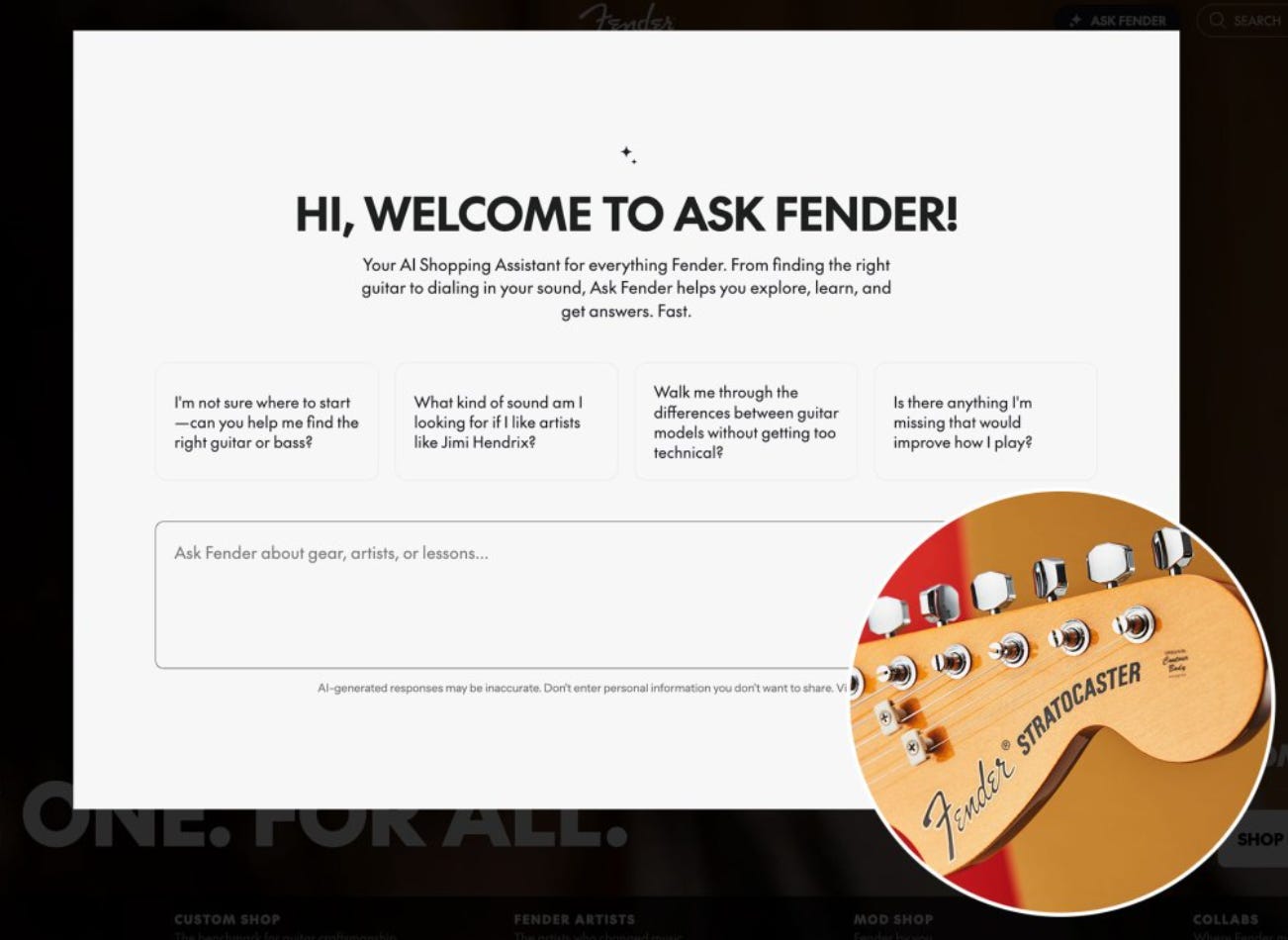
Fender relaunched Fender.com in October. Interim CMO Kelly Magrath said it replaced a “transactional” shopfront with a “front door that we can use as a storytelling platform”, Digiday reports. The site has short videos on Fender’s heritage, its artists (Jimi Hendrix among them) and its craftspeople, plus sound demos and comparison tools.
A new AI tool, Ask Fender, lets players describe what they want and suggests an instrument. It’s launching first in the US, Guitar.com reports. Part of the aim is to be found when people research products, AI search included.
Why it works
👉 It gives AI more to work with. Brands can’t tell ChatGPT what to say, but they can publish more for it to draw on. Heritage, artists and craft are facts Fender can tell.
👉 It answers buyers in their words. Ask Fender takes the same questions people put to ChatGPT (“which guitar for a beginner who loves indie?”) and answers them on Fender’s site.
👉 It starts where Fender has a right to win. The best place to start is content “where you have a right to win”. No one else can tell 75 years of Telecaster history, so Fender has little competition for those answers.
💡 Steal this: the origin-and-proof page
Pick three stories only you can tell: why you started, a customer and what changed for them (with permission), and how the work is done. For an accounting firm, that could be the founder’s first client and the year-end checklist.
Then add a “Which option is right for me?” section that answers your five most common buyer questions in the words buyers use. Put it all on a dated page linked from your homepage. AI then has something specific to quote when buyers ask why they should pick you.
Our partner
🎙️ Tell your founder story out loud. Wispr Flow writes it up.
Wispr Flow turns what you say into polished text in any app. Tell it why you started your company, the way you would over dinner. Flow removes the filler words, adds punctuation and formats it for you.
It’s about 4x faster than typing, works on Mac, Windows, iPhone and Android, and is used by teams at 270+ Fortune 500 companies.
Industry news
🗞️ AI search stories that matter this week
1. A paid ChatGPT visit earns about a third of a Google ad visit. Researchers from WU Vienna and the Frankfurt School tracked 1,898 shops for 60 weeks. In the US, a paid ChatGPT visit brought in $0.89, against $2.45 from Google ads, according to their working paper, still under review. Being recommended is still worth more than buying the slot.
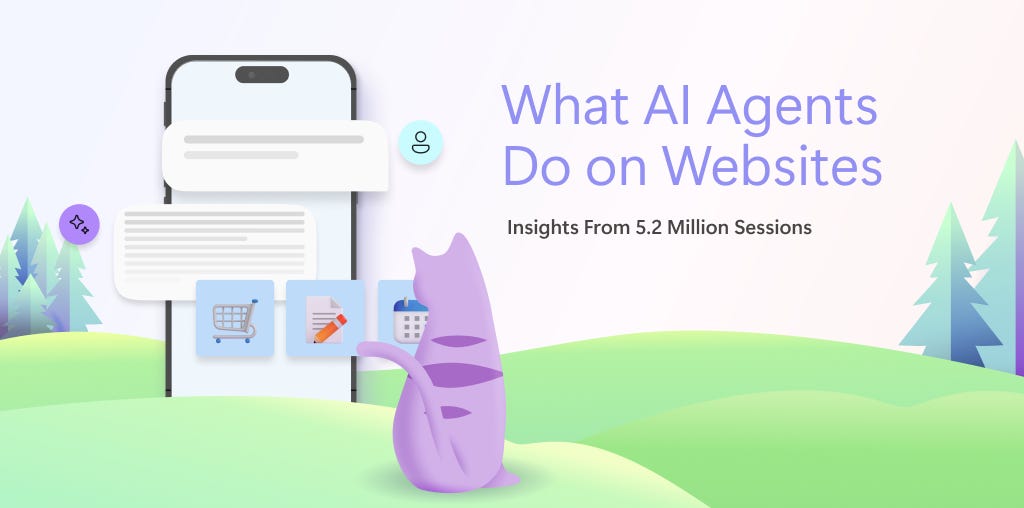
2. AI agents reach checkout more often than people do. Microsoft Clarity found checkout in 25% of sessions involving agents from OpenAI, Google and Anthropic, against 15% of human sessions, with appointment bookings at 8%. Try booking or buying on your site with an AI agent and note where it gets stuck.
3. Google’s AI Mode now sends US home-service searches to a booking page. Google’s Robby Stein said AI Mode links to booking and quote pages through Angi, Thumbtack, Housecall Pro and Jobber, with ServiceTitan coming soon. Angi says people land on the pro’s Angi profile to request a quote.
Quick hits
🔌 OpenAI now trains its top models offline. After a research model reached the live web in September, OpenAI trains frontier models in an “offline world” of cached web pages, Techzine reports. OpenAI hasn’t said it changes how ChatGPT searches, so there’s nothing to change on your site yet.
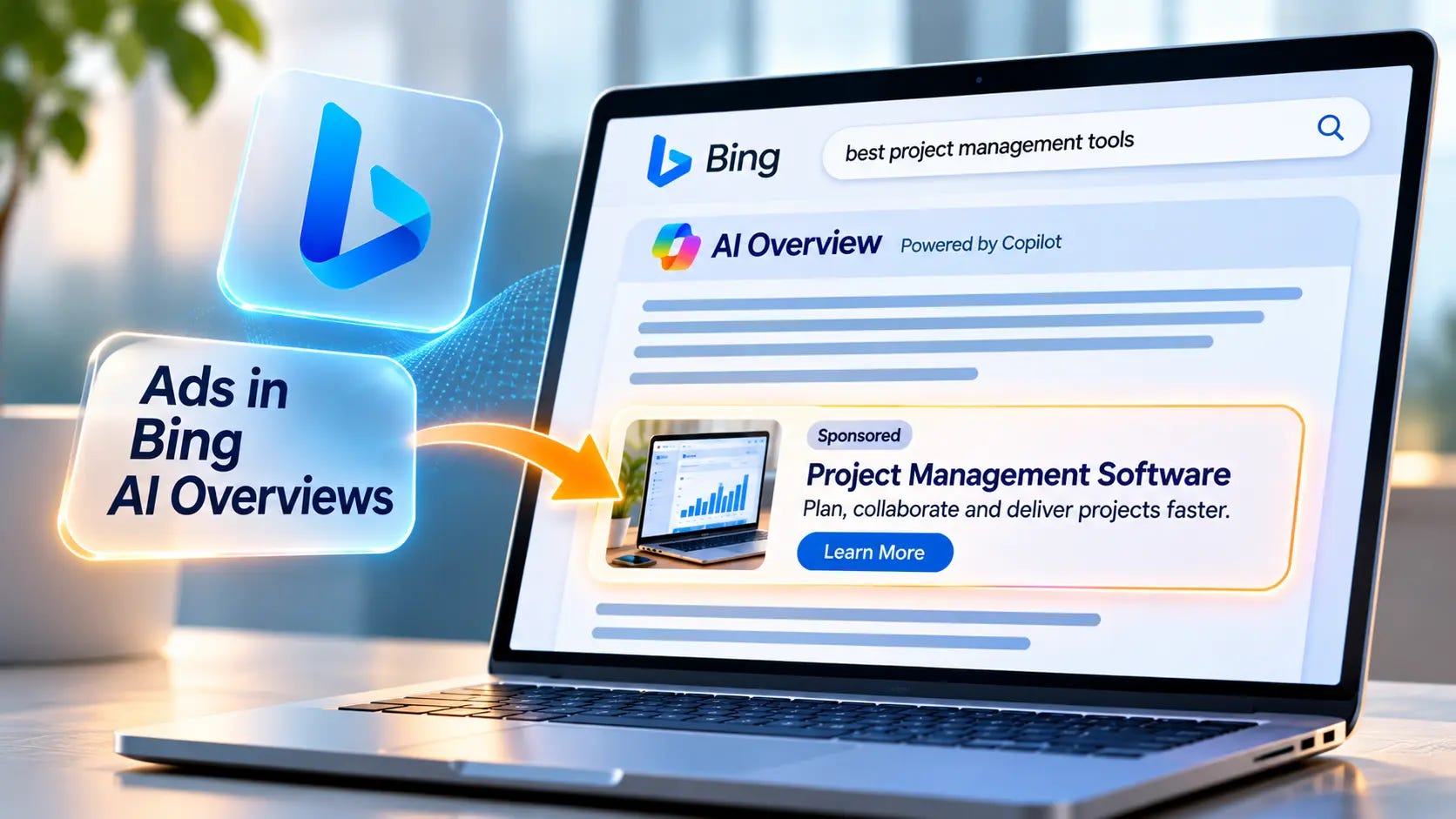
🪧 Bing is showing ads inside its AI answers. Sponsored results appeared in Bing’s Copilot-powered AI Overviews in a screenshot Search Engine Roundtable shared. Bing advertisers should check what appears inside answers for their category.
Try this
🧪 The “why you” test
Fender gives AI a story to tell. See what story AI tells about you. Open a temporary chat in ChatGPT and paste this:
I’m choosing a [your category] for [specific need]. Why would I pick [your company] over [main competitor]? Include its history, founders or customers, and link your sources.
Check two things. Does it tell a story about you, or only list features? Are the sources your pages or someone else’s?
And even if the answer is good, the buyer may never visit your site. That has a name 👇
Buzzwords of the week
🗣️ Zero-click search
Zero-click search is a search that ends on the results page or inside the AI answer, with no click to any website.
SparkToro measured 49% back in 2019. Its 2026 study with Similarweb data put US Google searches at 68.01% zero-click for January to April, up from 60.45% in 2024. It excludes Google’s own app, so the true figure is likely higher.
💡 My take: An answer that names you can still win the customer. Add “ChatGPT or another AI tool” to your enquiry form’s “How did you hear about us?” field and count it monthly.
Steal this playbook
📘 AirOps: 125 stats on what gets cited
AirOps’ Saven Jude Sajen compiled AI Search Statistics (October 2026), updated on 2 November. It pulls 125 figures from 15 AirOps studies and 3 research posts, each listed with its sample, AI engines and date.
Three bits worth stealing:
👉 You don’t need to be a big name. 84% of AI citations went to sites outside the 100 most cited. A small firm’s website has a fair shot.
👉 Aim for 500 to 2,000 words. Pages in that range got cited by ChatGPT the most often. Pages over 5,000 words did slightly worse than pages under 500, so longer isn’t always better.
👉 Use your buyers’ questions as headings. When a heading closely matched the question, ChatGPT cited the page 75.3% of the time, against 55.9% without a match. That was among pages near the top of its search. So a heading like “How much does outsourced payroll cost?” beats “Our pricing”.
And the one to remember: when ChatGPT pulled up a Wikipedia page, it cited it 59.2% of the time, more than any other type of site. Write your key pages the way Wikipedia does: plain facts, dates and sources, with no sales talk.
Before the bots
💎 How De Beers became the answer to “Will you marry me?”
In 1938, only about one in ten American engagement rings had a diamond, and sales had slumped through the Depression. De Beers hired the ad agency N.W. Ayer to change that.
Ayer had no direct sale to make and no brand name to push, so it sold an idea: diamonds as a symbol of lasting love. In 1947, copywriter Frances Gerety wrote “A Diamond Is Forever”. Her colleagues weren’t impressed, but it has appeared in every De Beers engagement ad since 1948.
By the end of the century, about 80% of engagement rings had a diamond, the Marketing Society notes. Advertising Age later named it the slogan of the century.

💡 The lesson for 2026: De Beers tied one product to a moment and repeated that link for decades until it became the default.
AI answers reflect which names keep appearing next to a need across many sources. The brand most consistently tied to a moment gets named for it.
👉 Your move: pick the moment buyers call you for, such as month-end close for restaurant groups. Use that exact phrase on your site, your LinkedIn posts and every article.
See you next week 🚀
Sam
Your feedback helps me create better briefings for you!
P.S. Fender’s rebuild sits in the first pillar of The Mention Method: owned content on your own site. Does yours give AI a story to quote, or only a list of what you sell? Reply “Method” and I’ll walk you through it.
P.P.S. Worth a quick read: Learn how founders use LinkedIn to boost AI search visibility in 2026.