

Welcome to your weekly no-BS briefing on AI search. See what changed, learn what’s working, and get new ideas to steal, all in 5 minutes. Let’s goooo 🚀
In today’s edition:
🤖 How the Daily Mail is getting brands into AI answers
🛒 Walmart welcomes AI shoppers, and AI Mode hits Reddit
🧪 A two-minute test using your buyers’ longer questions
🍊 How an ad man got America to drink its oranges
Mention worthy
🤖 The Daily Mail is testing a way into AI answers
Most brands hope a publisher will mention them one day. The Daily Mail is checking which AI answers a brand is missing from, then writing content to fill the gap.

The Daily Mail is running 12 to 15 tests for advertisers across the US, UK and Australia, Digiday reports, ahead of an AI visibility product early next year. Carly Steven, its director of SEO and editorial ecommerce, says the team finds the questions people ask AI about a brand’s category, tracks which sources get cited, and creates branded content where there’s an opening.
For one unnamed personal finance brand, visibility across its target questions rose from about 50% to nearly 75%.
Why it works
👉 It starts with the gaps. The team checks which sources AI cites before writing anything, and skips questions where government or medical sites already dominate.
👉 It sits on a site AI already reads. The new content was cited for most of the questions they tracked, because it lives on a publisher AI tools already draw from.
💡 Steal this: the cited-outlet list
Write down the 10 questions your buyers ask most, run each one in ChatGPT, and note which publications it cites. For an accounting firm, that might be a small-business section of a national paper. For a software company, a review site like G2.
Pitch, contribute to or sponsor those outlets. You end up named on the pages AI already pulls from.
Industry news
🗞️ AI search stories that matter this week
1. AI Mode ads earn Google less, and it’s sticking with them. Growth in AI Mode searches hit ad revenue “because of the lower monetization we were seeing in AI Mode”, Google’s Philipp Schindler said. Sundar Pichai added that AI Mode questions are three times longer than classic searches. Write pages that answer those longer, more detailed questions.
2. Reddit says Google’s AI Mode doesn’t send traffic. Reddit’s search referrals fell by more than 1 million a week on average in October. “The reality is, AI Mode does not drive traffic,” CEO Steve Huffman said. If even Reddit is losing clicks, judge your AI visibility by mentions and enquiries as well as visits.
3. Walmart lets AI agents shop for your customers. Its new Agent Gateway lets approved agents, including ChatGPT, Gemini and Meta’s Muse, search stock and buy across Walmart and Sam’s Club. Amazon has started blocking agents. If you sell products, check that your prices, stock and specs are easy for an agent to read.
Quick hits
🚫 Claude will stay ad-free. Anthropic’s IPO filing lists no ad business, while its own ad spend rose from $33M in 2024 to $147M in 2025, Digiday reports. Nobody can buy their way into Claude’s answers, so earned mentions are the only route in for now.
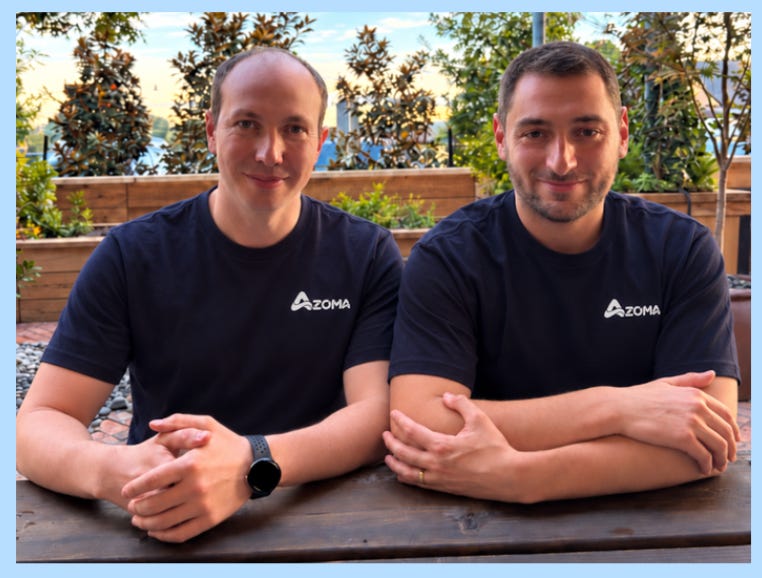
🛒 Azoma raises $11.2M to get brands picked by AI shopping agents. Its customers include L’Oréal, Unilever and Mars, and Azoma says revenue grew almost tenfold in a year. The biggest consumer brands are now paying to be the product an agent chooses.
Try this
🧪 The long-question test
Buyers now ask AI long, specific questions, so run your test with one of those. Open a temporary chat in ChatGPT and paste this:
I run a [size and type of business] and need [what you sell] that can [specific need]. Which providers would you recommend, and why? Link your sources.
Check two things. Are you named, and does it describe you correctly?
Then open one of the sources and trace where its numbers came from. Some can lead back to data nobody ever checked 👇
Buzzwords of the week
🗣️ Citation laundering
Citation laundering is when a dubious claim looks more trustworthy every time a respected source repeats it.
Peec AI’s Metehan Yesilyurt showed how it works. He published 50,000 pages of made-up statistics for about $50. ChatGPT kept citing them, and the numbers turned up in an academic paper and in investment research from Qatar’s largest financial group.
💡 My take: AI tools retrieve numbers without checking them. Before you quote a stat, trace it to the original. Better still, be the original: verified, dated data with your name on it, like Ramp’s monthly index from last week.
Steal this playbook
📘 StackedGTM: the 2027 guide to AEO
Josh Grant of StackedGTM wrote The Definitive 2027 Guide to AEO, updated on 19 October. It opens with a G2 survey: 51% of B2B buyers now start research in a chatbot more often than in Google.
Three bits worth stealing:
👉 Mine your buyers’ questions. Pull them from sales calls, support tickets and G2 reviews, then use them for your prompts, content and positioning.
👉 Track recommendations separately from citations. Across 1,094 categories, Semrush and Kevin Indig found the most-cited site was also the most-recommended brand only 21% of the time. AI can use your content and still recommend someone else.
👉 Make your facts readable. Your robots.txt can allow AI crawlers while your firewall blocks them. Check your prices appear in the page’s raw HTML, where crawlers can read them without running scripts.
And the one to remember: the guide says AI sends different questions to different places. Facts like price and specs come from your own site, while opinions like “is it any good?” come from reviews and communities. If your site only covers facts, someone else is answering the opinion questions about you.
Before the bots
🍊 How Sunkist became the name behind orange juice
By 1907, California was growing five times as many oranges as 15 years earlier. Unsold fruit piled up, and growers were cutting down their trees.
Their co-operative hired ad man Albert Lasker. A test campaign in Iowa boosted orange sales by 50%, and the oranges got a brand name: Sunkist. Then Lasker gave people a new way to use them, with the slogan “Drink an orange” and juice extractors sold alongside the fruit.
By the mid-1930s, one in five Sunkist oranges was drunk as juice.
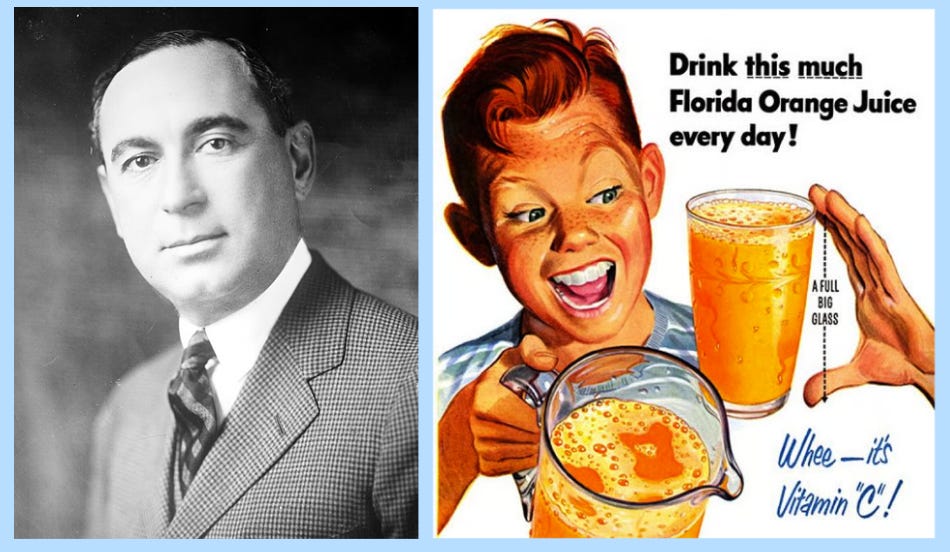
💡 The lesson for 2026: Sunkist grew by owning a new use for its product, so its name arrived with the habit.
AI answers are built around uses: “best [product] for [situation]”. The brand most clearly tied to a specific use is the one that gets named for it.
👉 Your move: pick one specific use for what you sell that competitors ignore, such as payroll for restaurants with seasonal staff. Publish the page that answers it, using that exact phrase.
See you next week 🚀
Sam
Your feedback helps me create better briefings for you!
P.S. The Daily Mail’s tests sit in the second pillar of The Mention Method: getting named on the sites AI already trusts. Want to know which sites AI cites for your buyers’ questions? Reply “Method” and I’ll walk you through it.
P.P.S. Worth a quick read: Learn how founders use LinkedIn to boost AI search visibility in 2026.