

Your weekly no-BS briefing on AI search. See what changed, learn what’s working, and get new ideas to steal, all in 5 minutes. Let’s go.
Welcome back. Plenty of brands have a “best [category]” blog post with their own name at number one. New data says Google’s AI has started ignoring them. In the same week, ChatGPT ads got pictures and proper measurement.
Industry news
🗞️ AI search stories that matter this week
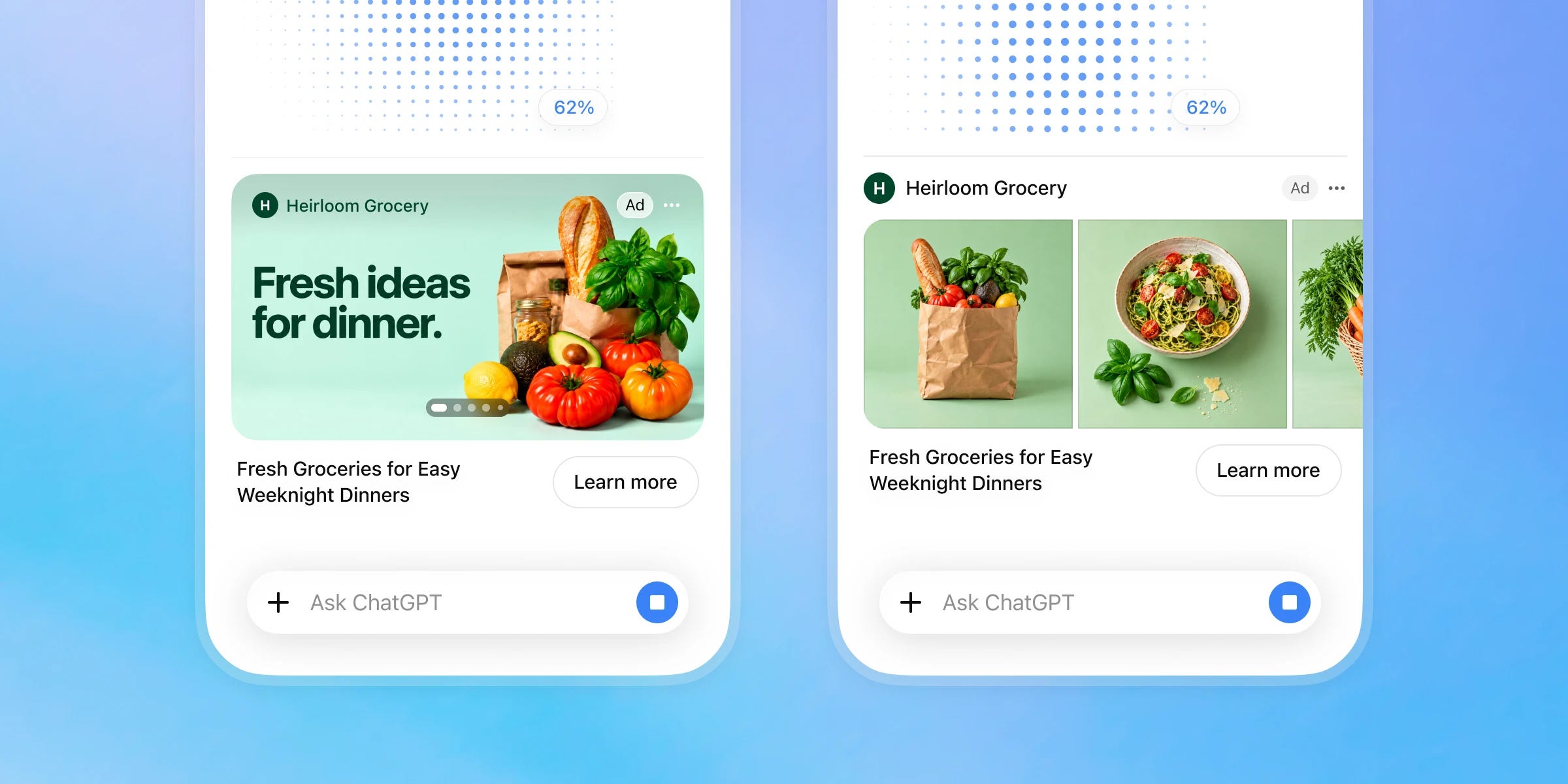
1. ChatGPT ads now come with pictures and proof. OpenAI will test image ads that appear while ChatGPT is generating an image, starting with a small group of US advertisers. ChatGPT ads also now plug into the tracking tools marketing teams already use, so you can compare them with your Google and Meta ads. If “we can’t measure it” was your reason to wait, that reason has gone.
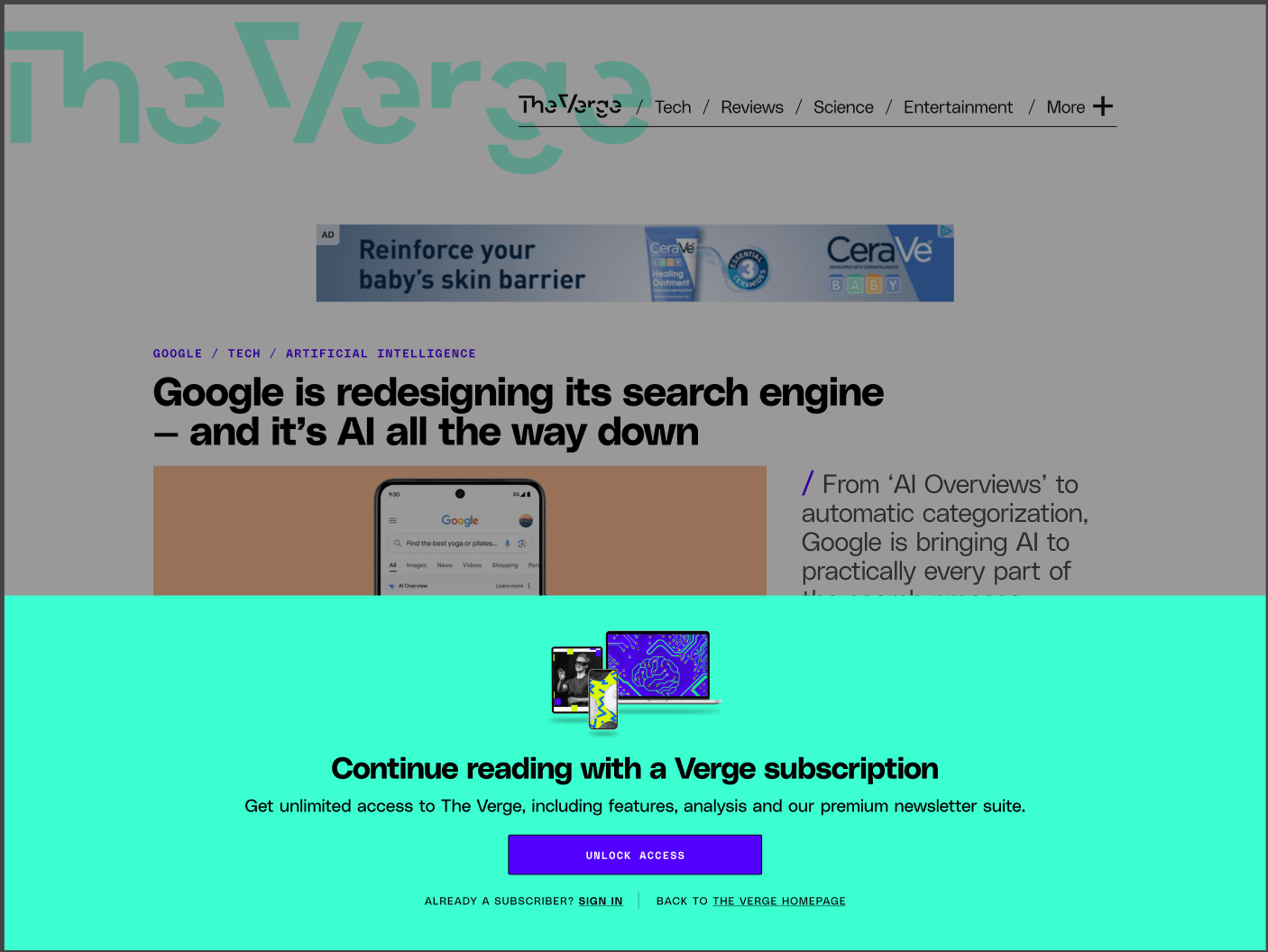
2. The Verge will soon make some readers sign up before they can read. Digiday reports the test starts later this month, with the wall shown to a share of visitors or to people arriving from certain sites. AI search is sending publishers fewer readers, and one executive said ads shown to signed-in readers can sell for up to eight times more. Before you pitch or pay for coverage, check whether buyers can still read it.
3. Google’s AI is dropping brands that rank themselves first. SEO consultant Lily Ray checked 100 “best B2B software” searches in September. AI Overviews left out the brand that had put itself top 83% of the time, up from 69% in June, and citations of those self-ranking pages fell 38%.
Quick hits
🏷️ ChatGPT’s writing gets a watermark in the EU. OpenAI will add an invisible watermark to ChatGPT text for EU users in the coming weeks. Changing one word in ten reduces detection from 92% to 66%, which is one more reason to edit what AI gives you.
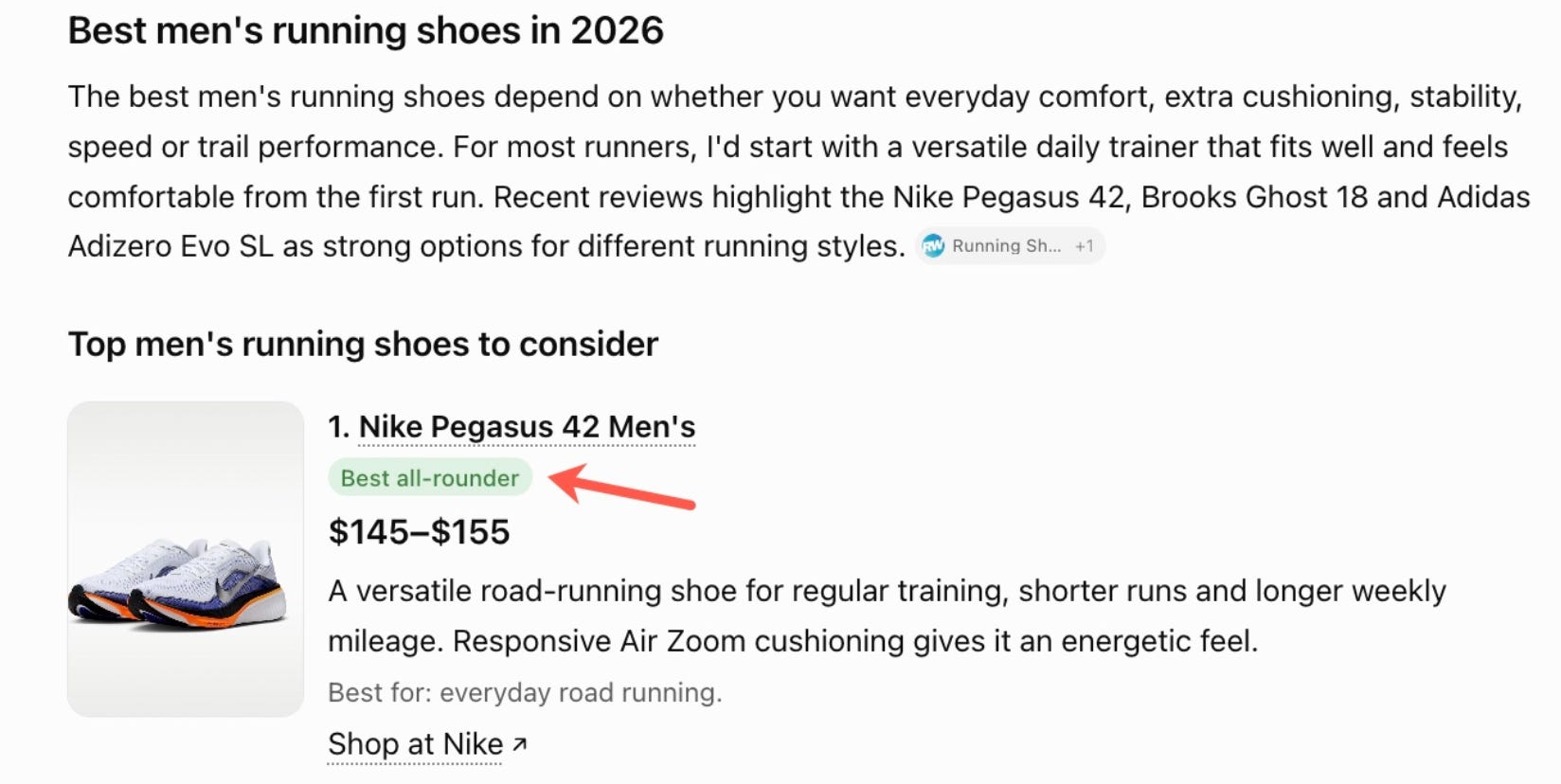
👟 ChatGPT may be handing out “best for” badges. Brodie Clark spotted labels such as “best all-rounder” and “best for beginners” on product results. OpenAI hasn’t confirmed the test. Say on your product page who it’s best for.
Mention worthy
🍽️ The supermarket podcast with a billion plays
Most branded podcasts are a marketing team talking to itself. Waitrose has surpassed a billion plays, and John Lewis borrowed the format for Gift List, its chatbot show.
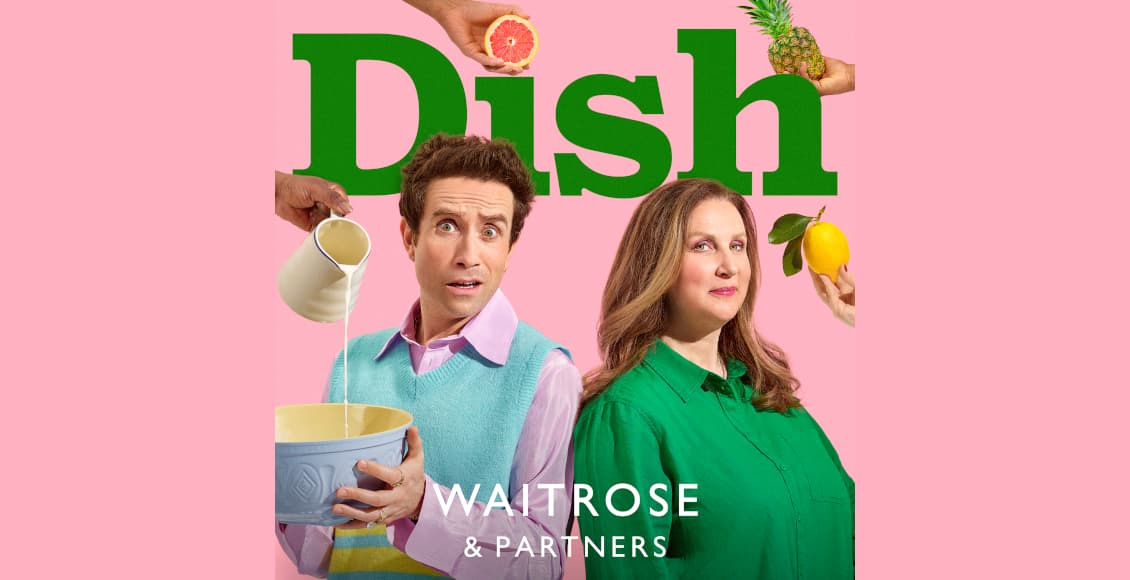
Dish launched in 2022, with Nick Grimshaw and Michelin-starred chef Angela Hartnett hosting a famous guest for dinner. Olivia Colman and Benedict Cumberbatch have been round, and Tom Holland’s episode reached 2.3 million people. In June, Waitrose said the show had passed one billion downloads, views and listens across 165 episodes.
Why it works
👉 It lives on the site AI cites most. More people now watch Dish than listen, much of it on YouTube. Meltwater’s study of 9.5 million AI citations found that YouTube was one of the most-cited sources.
👉 Other people say the name. LinkedIn, Reddit and YouTube accounted for 47.5% of citations, against 18.7% for company websites and 15% for review sites. A guest praising a pudding on these platforms is someone else talking about Waitrose food.
👉 It keeps coming. AI tools tend to cite a page for a few weeks, then move on. A show with 165 episodes and counting gives models something new to find all year.
💡 Steal this: the name-it-out-loud clip
Go through video you already have, such as webinars, customer calls and podcast guest spots. Find three moments where someone answers a question your buyers ask.
Keep the ones where your product or company is said by name. AI tools mostly work from the title, description and transcript, so “it’s brilliant” gives them nothing and “Acme’s onboarding took us two days” is a mention.
Post each clip to YouTube with the question as the title.
Try this
🧪 The two-minute mention test
Open a temporary chat in ChatGPT and paste this:
Recommend five [your category] for [your customer type]. For each one, tell me why you picked it and link the sources you used.
Then check two things. Are you named? Is your website among the links?
If you got the first without the second, there’s a name for that 👇
Buzzwords of the week
🗣️ The mention-citation gap
The mention-citation gap is the difference between how often AI names your brand and how often it links to you.
MarketScale’s B2B tracker has AI naming a brand in 26.4% of answers and linking to it in 17.1%. ChatGPT has the widest gap, at 33.3% named and 12.8% linked.
💡 My take: when AI names you but links someone else, it probably took the answer from their page. Run the test above and note which pages it linked. Then publish your own page answering that same question with only the facts you have, like prices, specs, and results.
Steal this playbook
📘 BuzzStream and YouGov: do people click AI’s sources?
BuzzStream had YouGov survey 1,000 US adults in September for Do Americans Use AI for News?, a five-question repeat of its January survey on AI news summaries.
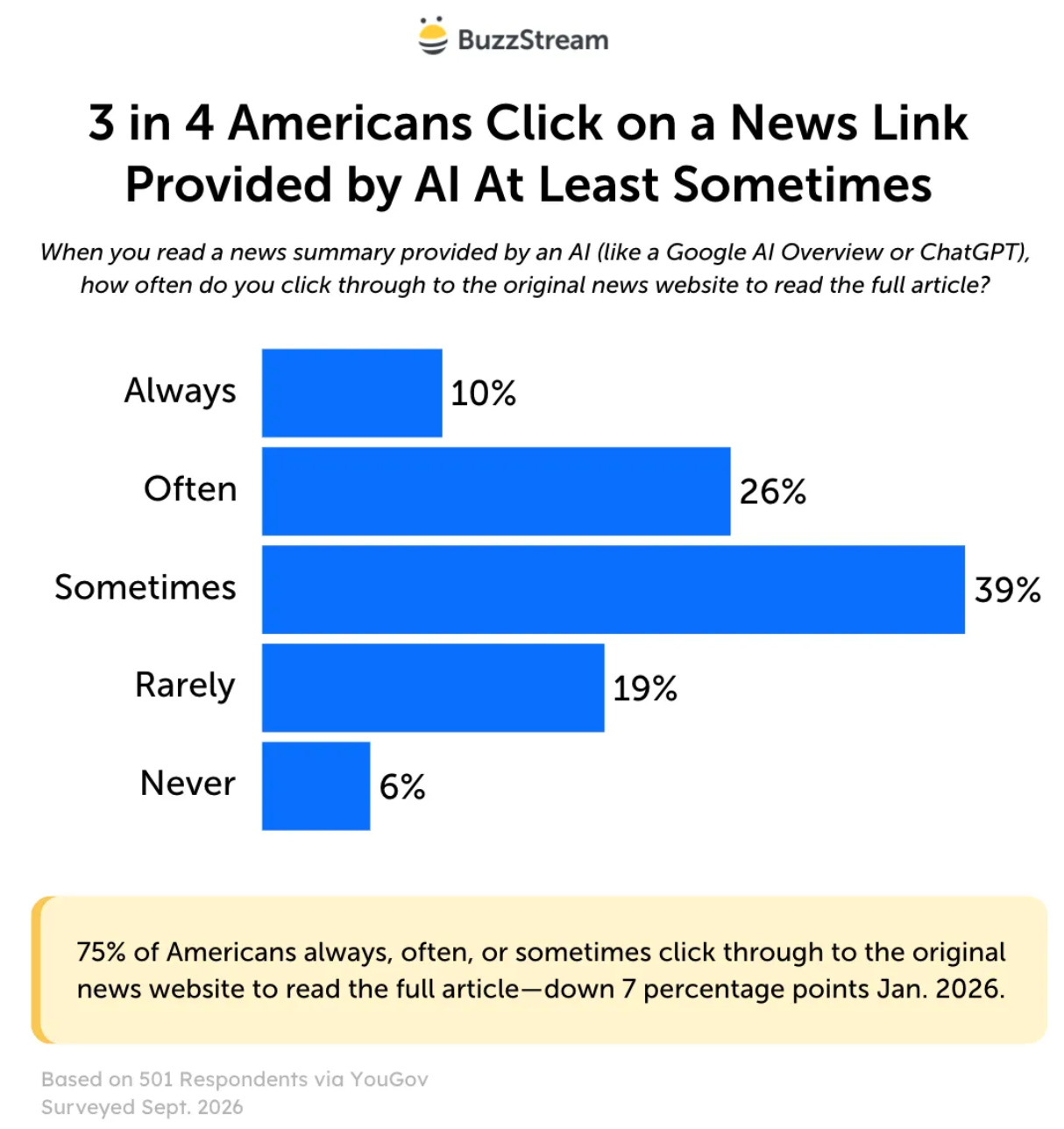
Three bits worth stealing:
👉 Make the mention do the selling. Few people click through to the source every time. Check that your homepage and profiles describe what you do, and who for, in one clear sentence AI can repeat.
👉 Be the page people check. Two in three AI news users have caught AI getting a story wrong. Keep your prices, dates and specs on one page that’s current and easy to find.
👉 Keep your other channels running. Most Americans still rarely or never get news from AI. Email, search and social reach the buyers AI doesn’t, so build AI visibility on top of them.
And the one to remember: only 5% trust an AI summary over an outlet they know. Coverage from names your buyers already trust works on people and on AI.
Before the bots
🏅 How Good Housekeeping became the answer shoppers trusted
In 1909, Good Housekeeping opened an Institute in Springfield with a model kitchen and testing rooms. Its job was to check whether household products did what their adverts claimed. This was before the FTC existed.
That December, the magazine printed its first “Tested and Approved” list: 21 products, including a washer, a refrigerator and an electric iron. By the end of 1910, almost 200 had qualified. The list became the Good Housekeeping Seal, and by the 1940s the magazine backed approved products with its own refund or replacement warranty.
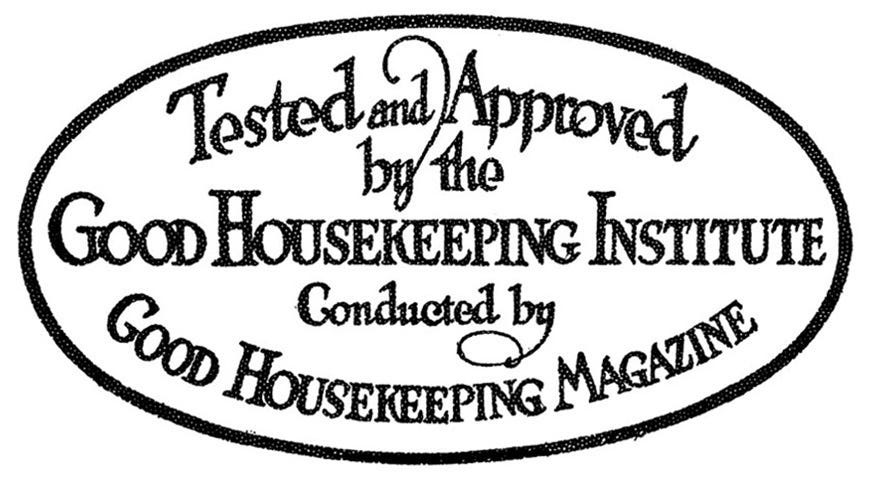
💡 The lesson for 2026: AI models do what 1910 readers did. They look for a named third party that has already tested the claim.
Reviews, comparison tables, standards bodies and creator explainers are today’s Seal. Your homepage is the advert, and everyone else is the Institute.
👉 Your move: name the independent tester your buyers already trust, and get your product in front of them this month.
See you next week 🚀
Sam
Your feedback helps me create better briefings for you!
P.S. Every story this week sits in one of the three pillars of The Mention Method, my process for getting brands named in AI answers. Want to know where your brand wins and loses across all three? Reply “Method” and I’ll walk you through it.
P.P.S. New this week on LinkedIn: How can founders use LinkedIn to boost AI search visibility in 2026?