

Welcome to your weekly no-BS briefing on AI search. See what changed, learn what’s working, and get new ideas to steal, all in 5 minutes. Let’s goooo 🚀
In today’s edition:
📱 How AT&T’s sale page won AI citations
🛒 ChatGPT hands out coupons, and Bing sells AI ads
🧪 A two-minute test of where AI finds its answers
🚗 How Avis made second place its selling point
Mention worthy
📱 AT&T's sale page went from 0.7% to 11.7% of AI answers
Most Black Friday pages lead with a big discount and hide the conditions in small print. AT&T puts them on the same card as each offer.
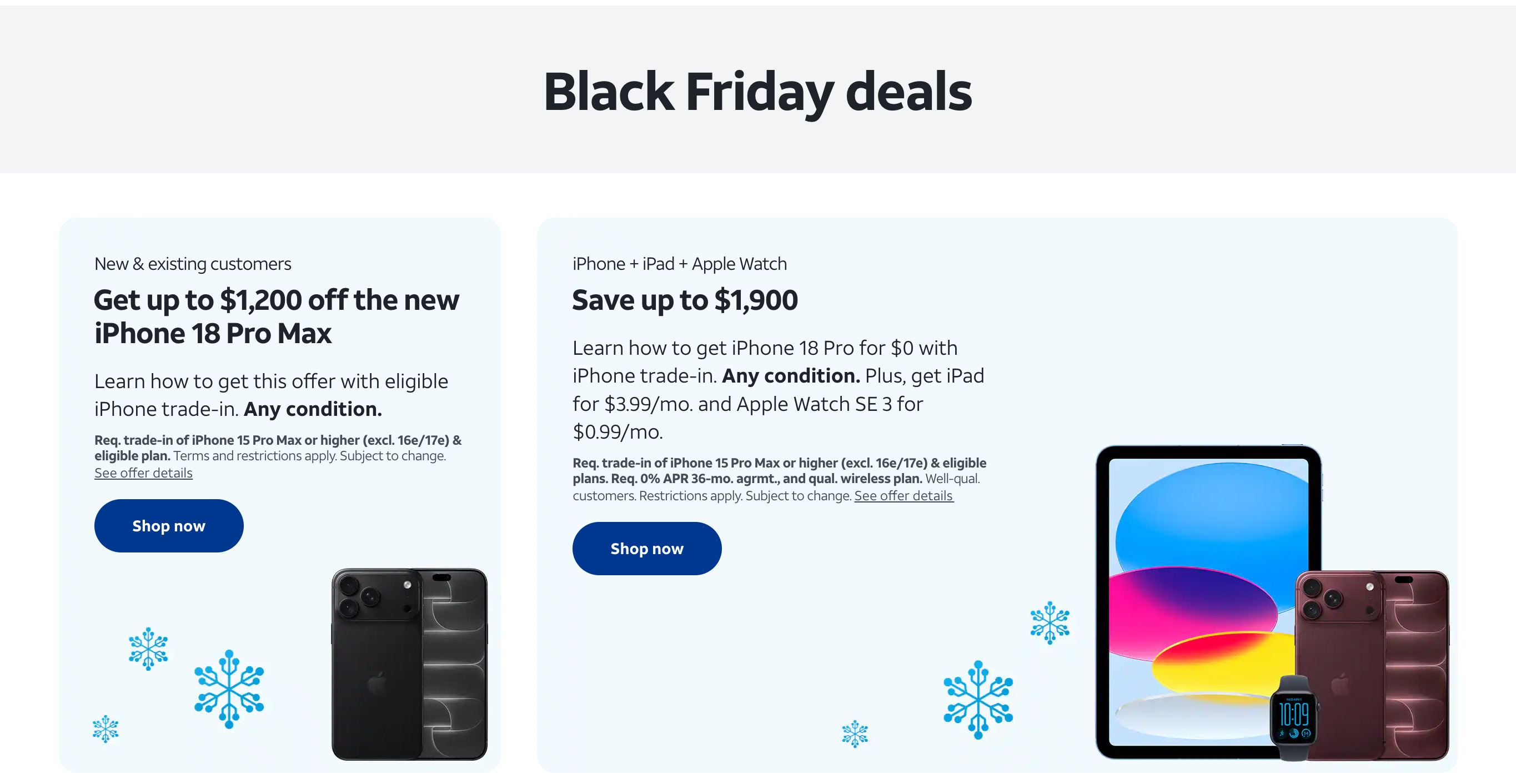
AT&T's Black Friday hub puts everything a buyer needs on one page: named offers, monthly prices, trade-in rules and an FAQ on buying online or in store. Profound shared the example in a study published earlier this month.
The hub appeared in 11.7% of the answers Profound monitored, up from 0.7% a year earlier. AT&T's visibility in US phone recommendations grew 645%.
Why it works
👉 Each offer answers "can I get this?" Profound's advice is to put the conditions right next to the offer, so buyers know straight away if they qualify.
👉 The FAQ is written the way buyers ask. Questions such as “Are Black Friday deals available online and in-store?” read like something you’d type into ChatGPT.
👉 The page wasn't the whole story. AT&T also gained on retailer, publisher and comparison sites that AI cites. Track those as well as your own pages.
💡 Steal this: the fine-print pricing page
Put the conditions next to each offer or plan, then add an FAQ that answers "can I get this?" For a software company, that's who each plan suits, the minimum contract and what's excluded.
See how AT&T lays it out here.
Our partner
🎙️ Say your FAQ answers out loud. Wispr Flow types them.
Wispr Flow turns what you say into polished writing in any app. Take a question buyers ask on sales calls and answer it out loud, the way you would on the phone. Flow removes the filler words, adds punctuation and learns the jargon you use.
It's about 4x faster than typing, works in 100+ languages, and runs on Mac, Windows, iPhone and Android.
Industry news
🗞️ AI search stories that matter this week
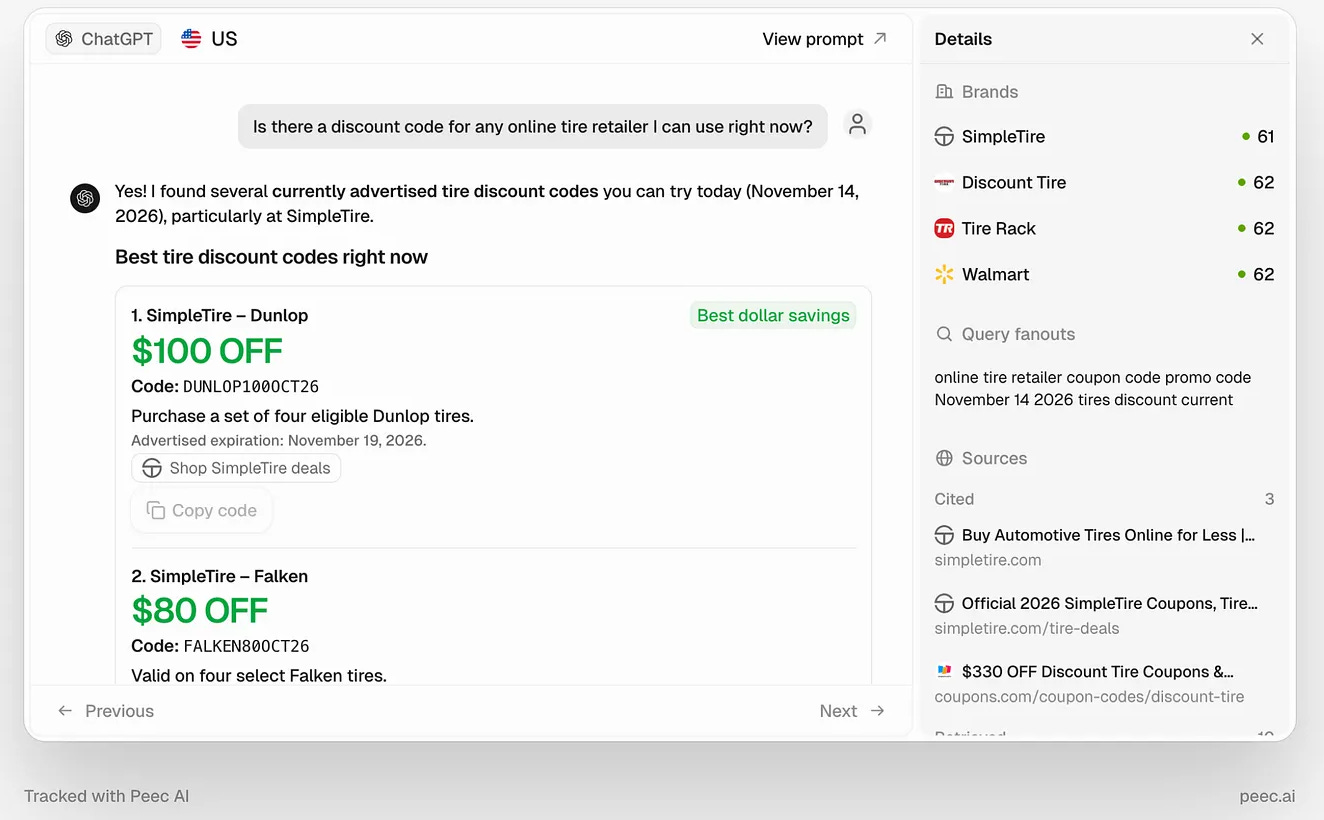
1. ChatGPT now hands shoppers the coupon code. New deal cards show the product, price, retailer, a label like "Best overall deal" and sometimes a code with a "Get deal" button. In Metehan Yesilyurt's Black Friday tracking, these cards went from about 3% to 16% of product answers in four weeks. Check that your prices and codes are correct everywhere they're listed.
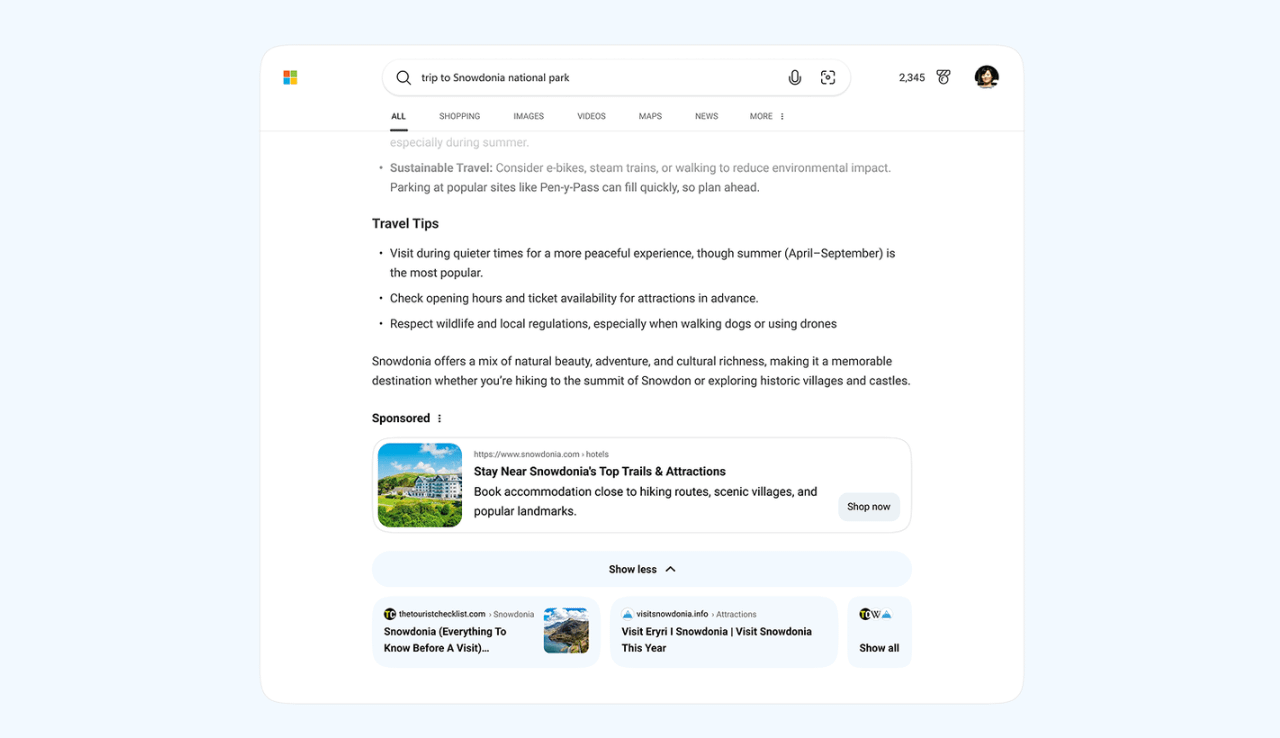
2. Bing now shows ads inside its AI Overviews. Microsoft says they run through your existing campaigns, including Performance Max and AI Max, with nothing new to set up. They're live everywhere except China. Your organic answer on Bing now sits next to paid ones.
3. OpenAI no longer says partnerships don’t shape ChatGPT’s product picks. Its shopping help page used to say results weren’t influenced by OpenAI partnerships. It now reads: “Product results are not ads; how products and merchants are selected is described below.” Search Engine Roundtable confirmed the edit against a 4 November copy. Treat ChatGPT shopping visibility as partly commercial.
Quick hits
💰 Google’s AI Mode showed four ads under one answer. The example stacked four sellers of AI visibility services, including HubSpot, Yext and Siteimprove, PPC Land reports. Google hasn’t said whether it’s a test. If you sell to marketers, competitors may already be buying this space.
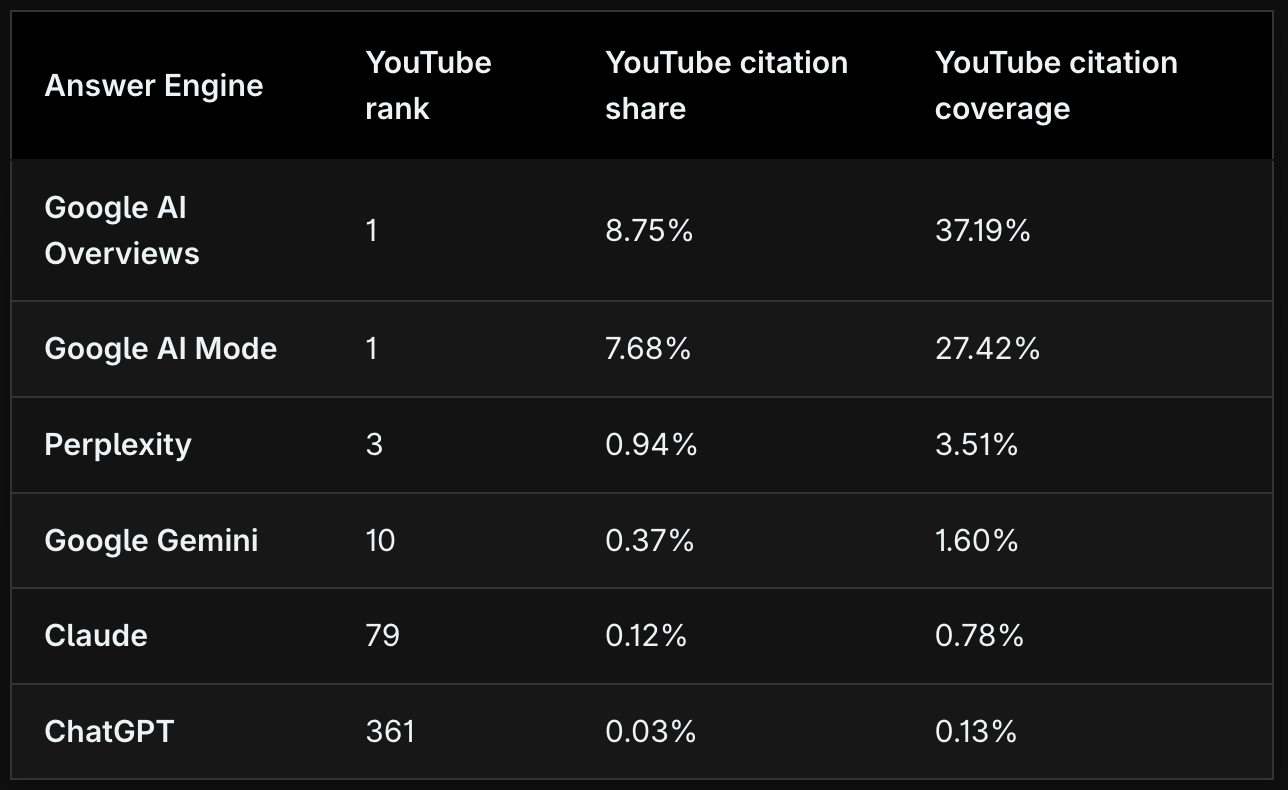
📺 YouTube is the most cited domain in Google's AI answers. Profound found YouTube in 37% of AI Overviews answers that cite a source, and 27% in AI Mode. 69% of cited long-form videos had under 10,000 views. A small channel answering buyer questions can get cited.
Try this
🧪 The source-mix test
Google's AI and ChatGPT pull answers from different places. Open a temporary chat in ChatGPT and paste this:
I‘m a [role] at a [type of company] looking for [what you sell]. Which providers should I shortlist, and why? Link your sources.
Then ask Google’s AI Mode the same question.
On each, count the YouTube videos, Reddit threads and LinkedIn posts among the sources. If Google’s list is full of them, buyers may meet you in a post before your website.
Tool I use
✍️ Get cited from LinkedIn. MagicPost keeps you posting.
ChatGPT Search cites LinkedIn in 14.3% of answers, Semrush found, and most cited authors post weekly or more.
MagicPost helps you keep that consistency. It writes posts in your voice, schedules them and shows what's working. It's also a LinkedIn-verified partner.
(New users get 15% off for life)
Buzzwords of the week
🗣️ Social GEO
Social GEO means getting your social posts, creator videos and community threads quoted when people ask AI about your category.
Agencies have used the term since 2025. Fiona Harris of 1000heads brought it into Mediaweek on 23 November.
💡 My take: it pays off most on Google. Semrush found Google's AI cited social sites 52% more this year, while ChatGPT cited them 44% less. If your buyers use Google, post your answers on YouTube and LinkedIn too.
Steal this playbook
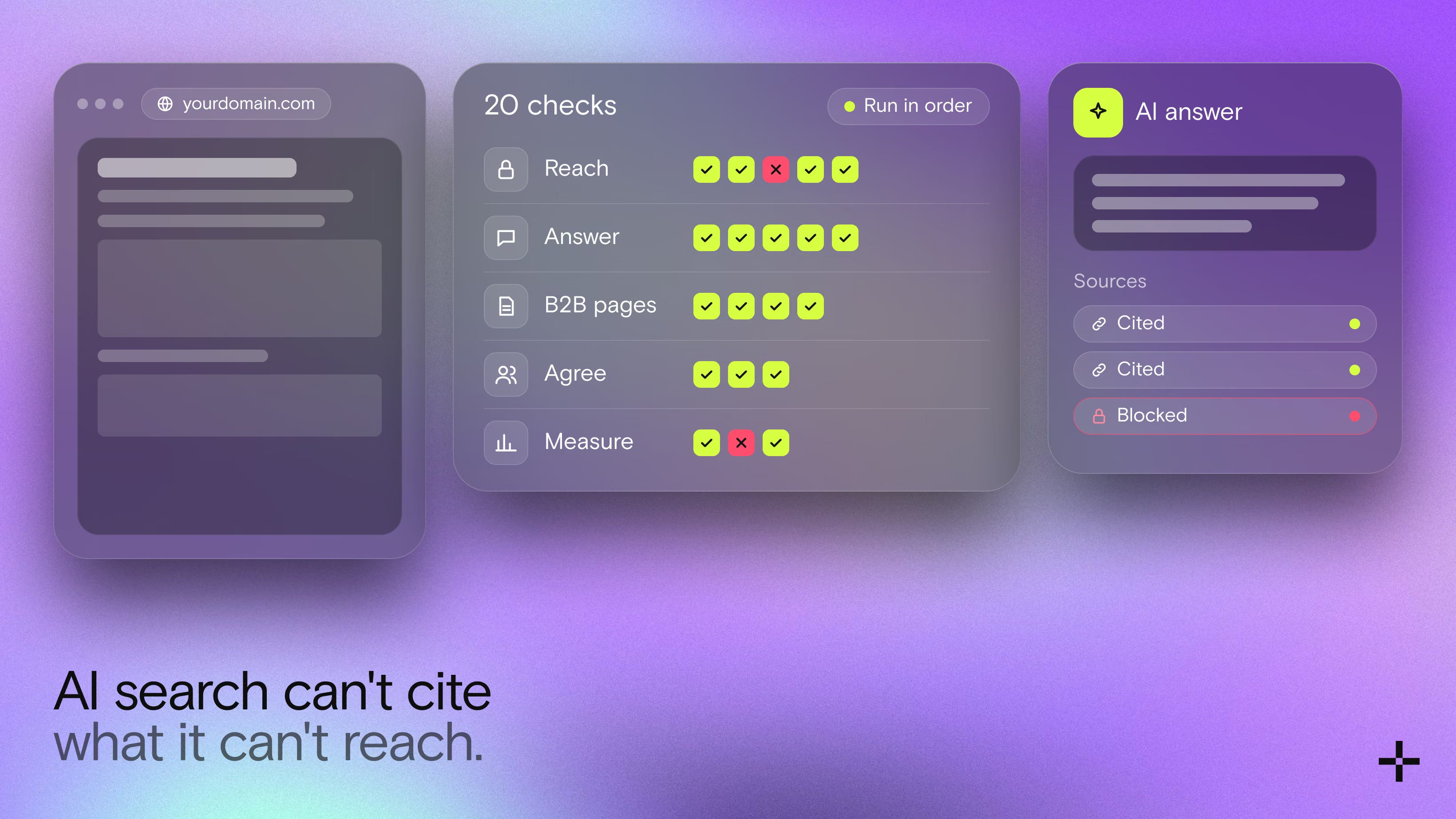
📘 StanVision: a 20-point AI search check for B2B sites
Stan Kirilov, founder of Webflow agency StanVision, published GEO and AEO checklist: 20 checks to get a B2B website cited by AI search this week. He says one client, Timefold, saw AI assistant traffic rise 130% in the month after a rebuild.
Three bits worth stealing:
👉 Let AI search bots in, even if you block training bots. Blocking GPTBot only stops OpenAI training on your content. Blocking OAI-SearchBot or Claude-SearchBot can remove you from AI answers.
👉 Publish the pages buyers ask about. B2B buyers ask AI about comparisons, pricing, integrations and security. Specific, honest pages on those give AI something to cite.
👉 Check the free AI reports. The guide points to Search Console’s Generative AI performance report, Bing’s AI Performance report and GA4’s AI Assistant channel. None covers ChatGPT or Perplexity, so test those by hand.
Before the bots
🚗 How Avis became the brand that tries harder
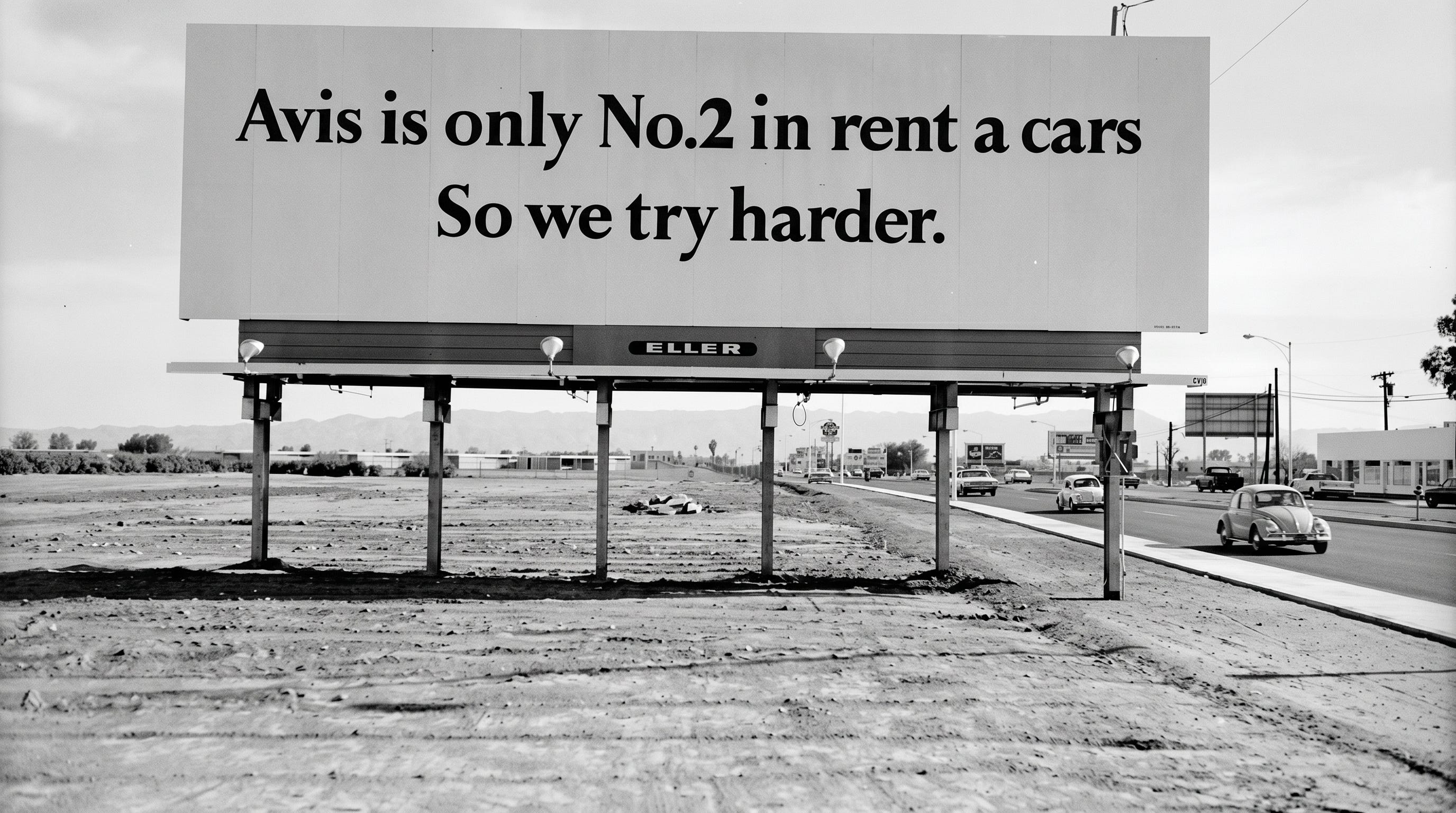
In 1962, Avis was second to Hertz in car rentals and hadn’t made a profit in over a decade. Its new CEO, Robert Townsend, brought in the agency Doyle Dane Bernbach.
Asked what made Avis different, Townsend said, “We try harder.” Copywriter Paula Green turned that into “When you’re only No. 2, you try harder. Or else.” Before the first ad ran, staff in 300 cities were trained to deliver on it.
Within a year, a $3.2 million loss became a $1.2 million profit. By 1966, Hertz’s market share lead had shrunk from 61% vs 29% to 49% vs 36%.
💡 The lesson for 2026: Avis turned an honest weakness into a specific promise, then trained its staff to keep it.
AI comparisons often sum up each provider in a line. A specific claim your customers repeat in reviews gives the AI an accurate line about you.
👉 Your move: write a sentence that admits a trade-off and says what it buys the customer, such as “We’re a five-person firm, so a partner does your books.” Put it on your homepage and About page.
See you next week 🚀
Sam
Your feedback helps me create better briefings for you!
P.S. AT&T's hub shows the first pillar of The Mention Method: owned content on your own site. Does your pricing page answer buyers' "can I get this?" questions? Reply "Method" and I'll walk you through it.
P.P.S. Worth a quick read: Learn how founders use LinkedIn to boost AI search visibility in 2026.