


I keep seeing the same pattern pop up everywhere.
Lenny’s Newsletter does it. And a handful of other creators I follow.
They’re all running some version of a “product pass” where partner deals are bundled into their paid subscriptions.
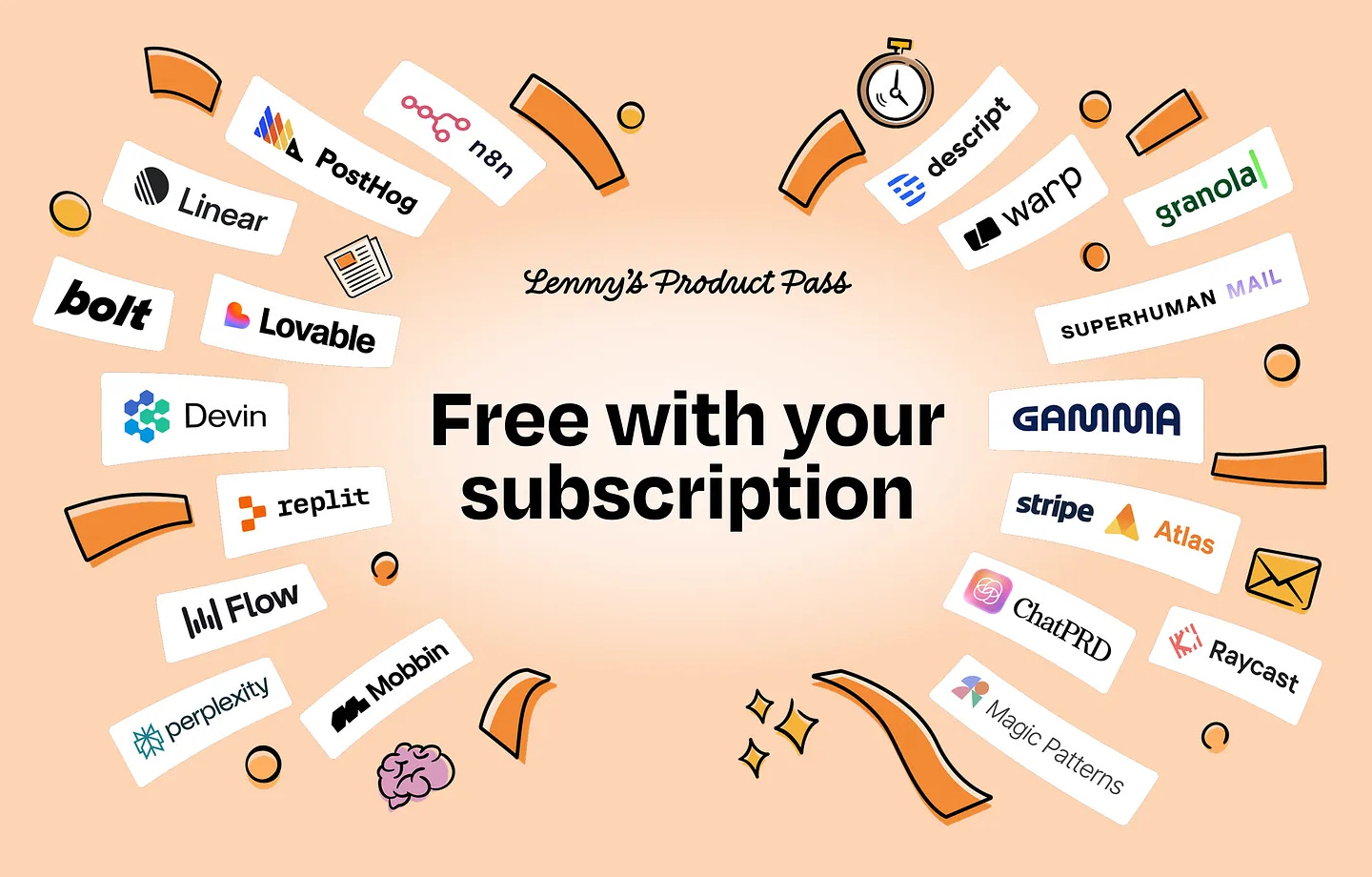
At first glance, it looks like a glorified coupon book.
But when you dig into how it works, there’s something way more interesting happening here.
Let me break down what’s really going on and how you could use this in your own business.
🔑 They’re not selling discounts. They’re selling access.
Lenny offers thirteen software tools inside Product Pass.
These tools normally cost $24,000+ per year if you bought them separately. With Lenny’s $200 subscription, you get them all free.
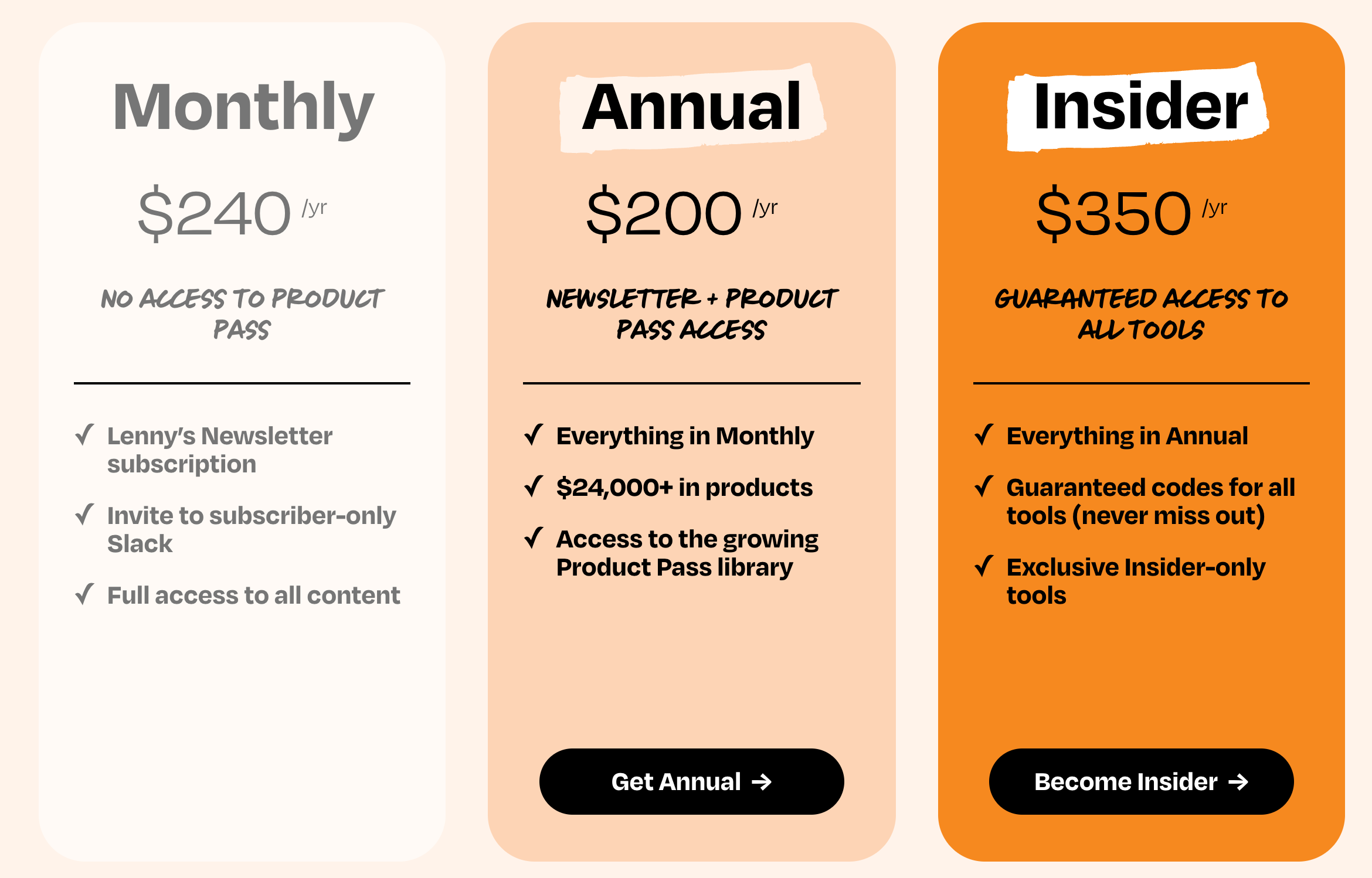
The pricing structure caught my attention.
Wait. The annual plan costs LESS than monthly but includes $24,000 in products?
That’s the whole game right there.
Stack so much value into annual that choosing monthly feels like a mistake.
Most people will use three or four tools. The rest will sit there, claimed but unopened.
And that’s completely fine.
Because the value isn’t in using everything. It’s in having access to everything.
This follows the Costco principle.
You don’t go there planning to buy a kayak, but knowing you COULD buy a kayak for $299 makes the membership feel worth it.
🤝 The partner companies are buying distribution.
Let’s think about what PostHog gets out of this.
They’re giving away $16,500 in value to Lenny’s subscribers.
That sounds insane until you realise what they’re actually getting…
Access to 1,000,000+ product builders (Lenny’s subs) who’ve already demonstrated they’ll pay for quality tools.
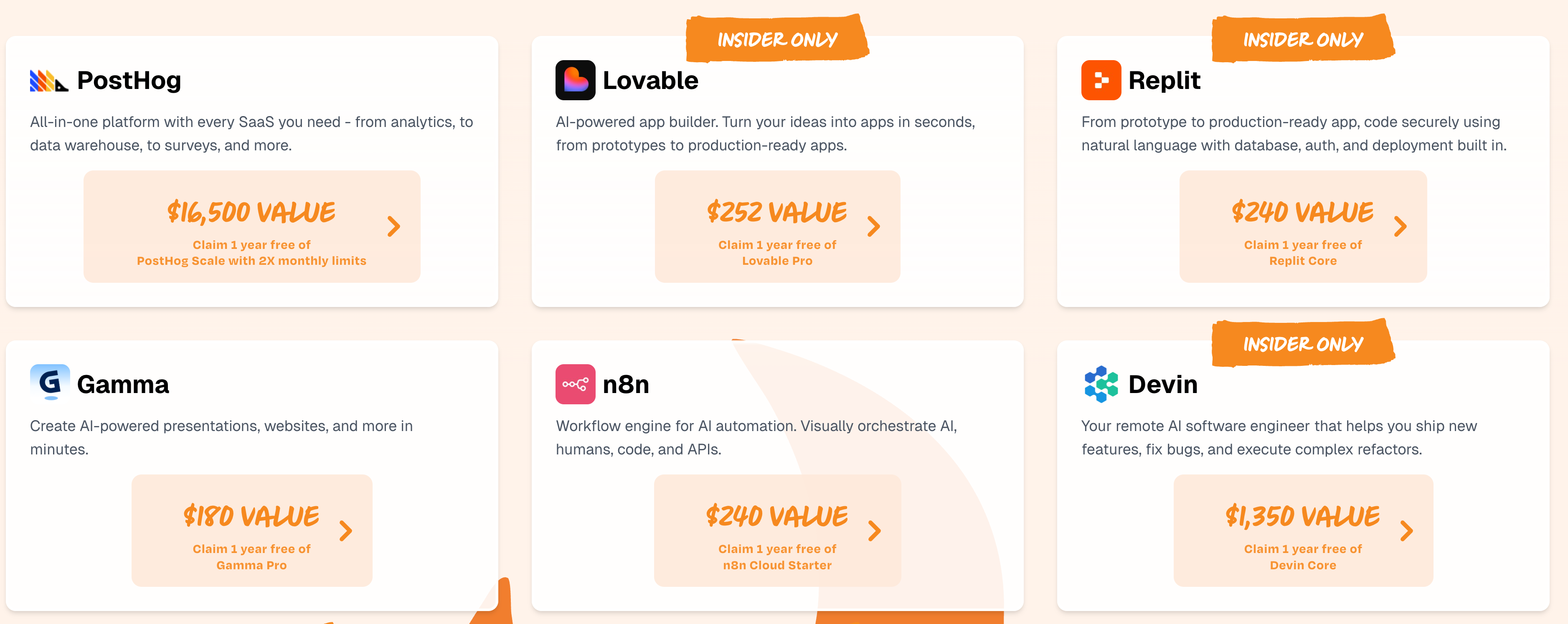
These are qualified prospects who pay $200-$350 to access his newsletter and tools.
When someone claims their PostHog code, PostHog now has:
Their email
Proof they’re willing to pay for tools
A year to convert them from “free user” to “paying customer”
✅ So how can you copy this playbook?
You don’t need thousands of subscribers to make this work.
Simply partner with complementary businesses, bundle their offers into your service, and use that combined value to justify higher prices or longer commitments.
Let me show you what this looks like across different industries.
If you’re a copywriter:
Partner with:
Unsplash+ or Shutterstock (negotiate 50 accounts/year for client stock photos)
Grammarly Business (pro accounts for your clients’ teams)
Asana or ClickUp (project management with team licenses)
Kit or Mailchimp (email marketing startup tier access)
Now, when someone hires you, you’re selling copy PLUS $5,000 in tools they’d need anyway. Your retainer suddenly looks like a bargain.
If you’re a business coach:
Partner with:
QuickBooks or Xero (accounting software for solopreneurs)
HubSpot or Pipedrive (CRM for client management)
Zapier or Make (workflow automation platforms)
Rocket Lawyer or LegalZoom (contract templates and incorporation docs)
Your coaching isn’t $1,500/month anymore. It’s $1,500/month for coaching plus the entire tech stack they need to run their business.
🧠 The psychology that makes this playbook work
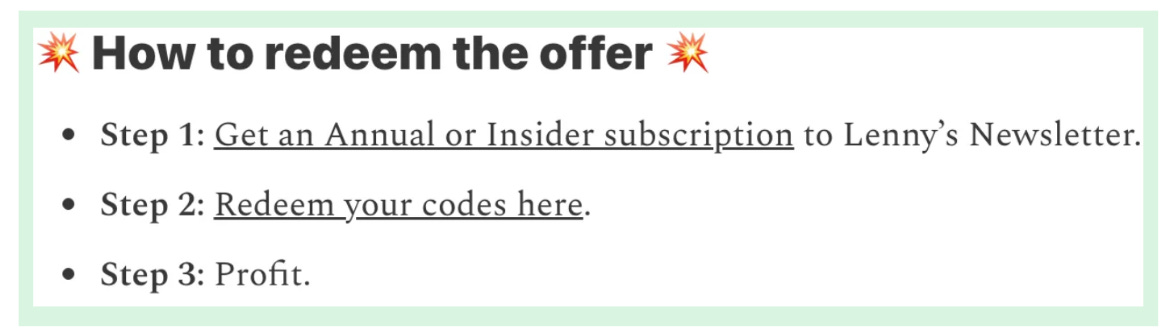
Notice how Lenny frames it.
He’s not asking people to “unlock” anything. You’re redeeming codes. Like you won something. Like you’re claiming a prize you earned.
👉 The takeaway: Stop asking people to “sign up” or “get started.” Ask them to claim their spot, secure their template library, or redeem their strategy session. The action is the same. The feeling is completely different.
💡 Your Friday takeaway
The product pass model works because it solves three problems at once:
For you: Higher perceived value, easier justification for annual pricing, ongoing relationship with partners who send referrals back.
For partners: Qualified user acquisition, potential conversion to paid plans, brand exposure to your audience.
For clients: More value than they expected, tools they needed anyway, feeling of getting a deal.
Start small.
Find one complementary business. Add it to your next proposal or pricing plan.
Watch what happens to your close rate.
See you next week 🚀
Sam
—If you enjoyed issue #21, please tap the Like button below 💙 Thank you!
This is a valuable post! Thank you for sharing your insights
Powerful and makes me think of partnerships in a completely different way.