


The other night I was looking for a movie to watch.
That’s when I came across Kudos Wiki.
Kheoh Yee Wei got sick of Netflix recommending the same 30 films.
So he wrote a Python script, let it run for 12 hours, and scraped Wikipedia for movies described as “critically acclaimed.”
1,800 films. 83 countries. 19 genres. Going back to the 1910s.
Now he’s selling the full list for $50.

I’m not telling you to buy it. I’m telling you to study how he built it.
Because inside this weird little movie project is a playbook for how any solopreneur or freelancer can turn free information into a lead magnet, a digital product, and recurring revenue.
Let me show you what you can copy. And how it applies to you.
🔍 He didn't create anything. He filtered it.
Kheoh didn’t write 1,800 movie reviews. He didn’t build a streaming service.
He found one signal:
Wikipedia articles that say a film “received acclaim from critics”
And scraped everything that matched.
Then he manually reviewed every result. Over 2,400 of them. Cutting anything where the acclaim was for an actor’s performance rather than the film itself.
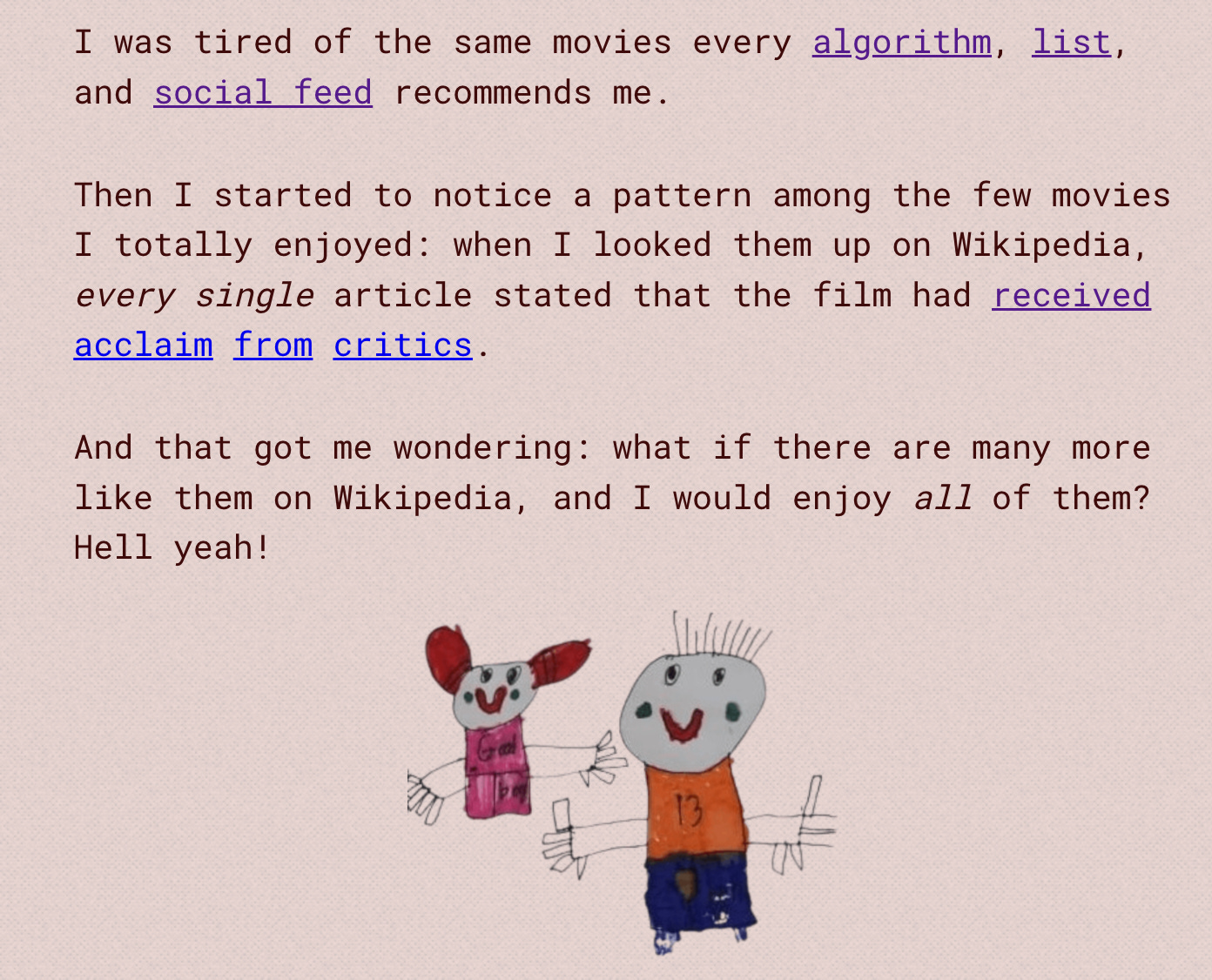
That human filter is the product people are buying.
Without it, you’ve got a spreadsheet. With it, you’ve got something people trust enough to pay for.
👉 Your move: Stop trying to create from scratch. What information already exists that your audience struggles to find, sort, or filter? That’s your product. You don’t write it. You organise it.
🧲 The free list is the magnet. The paid list is the money.
Look at how he set this up:
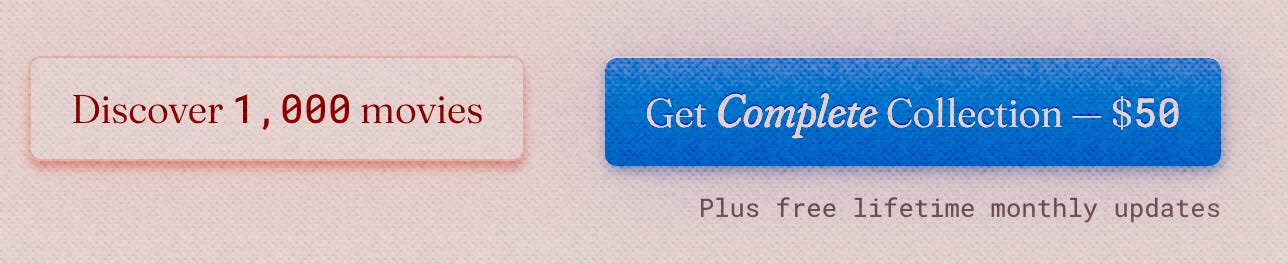
Two clear CTA buttons to avoid confusion.
The free version gives you 1,000 movies. That’s genuinely useful. But it’s also enough to make you think “wait, there’s 800 more?”
The paid version? Everything. Plus monthly updates as new critically acclaimed films hit Wikipedia.

👉 The lesson: If your free version doesn’t make people say “this is incredible,” your paid version won’t sell. Give away the good stuff. Charge for the complete stuff.
🎮 A spreadsheet didn't do this. The packaging did.
This is where most people would’ve stopped. Export a CSV. Throw it on Gumroad. Call it a day.
Kheoh didn’t do that.
The whole site feels like flipping through someone’s personal film journal.
Children’s drawings as illustrations.
Movie posters in rounded cards you want to click.
Soft pink palette.
Two people could sell the same list of 1,800 movies. The one who wraps it in personality will win every time.
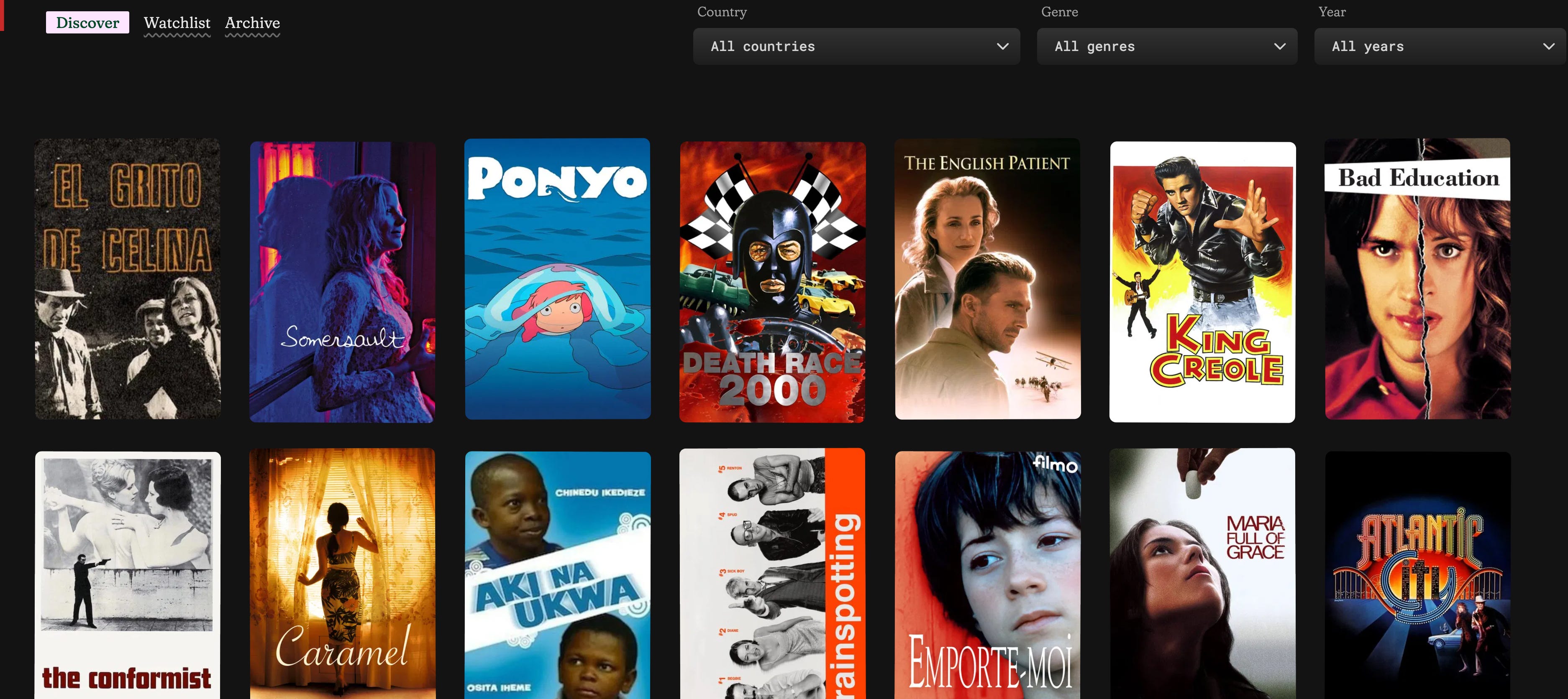
👉 The takeaway: Your directory doesn’t need to be complex. It needs to feel like you made it. Design, personality, and a point of view turn data into something people want to spend time with.
📣 Don’t guess. Find the demand first.
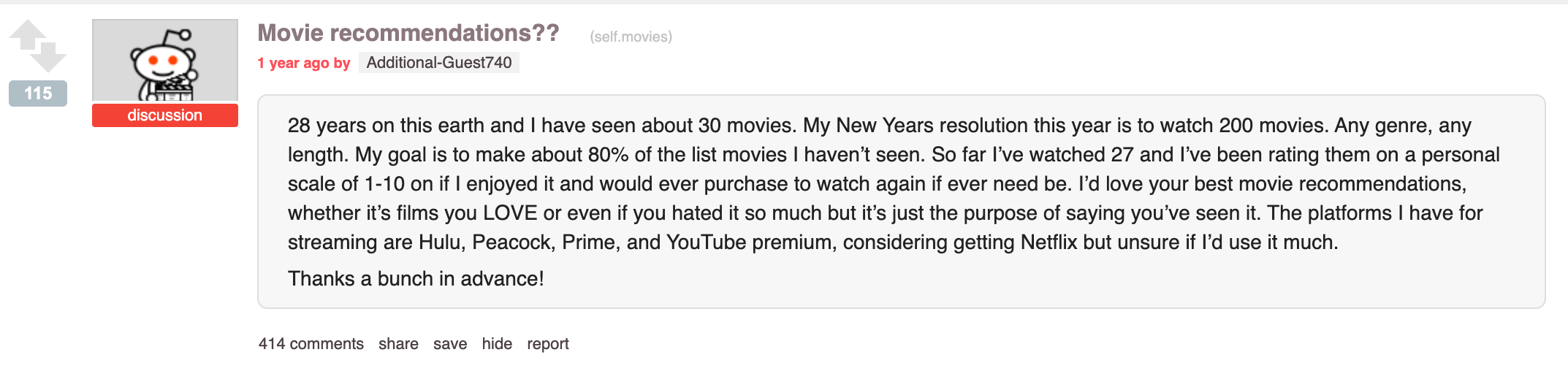
414 Reddit comments on a post asking for movie recs across any genre, any length.
Reddit, Facebook groups, niche forums… they’re full of people begging for curated recommendations that algorithms don’t give them.
👉 Your move: Before you build anything, search Reddit and forums for posts where your audience asks “where do I find…?” or “can anyone recommend…?” If you find threads with hundreds of replies, you’ve found your directory.
🧩 This isn't just a movie thing.
The model works everywhere. Here’s how it looks across different industries:
Freelance designer: Curate the 100 best landing pages sorted by conversion type. Source from Dribbble, Awwwards, One Page Love. Give away 200. Sell the tagged, searchable collection.
Marketing consultant: Build a swipe file of 1,000 high-performing email subject lines by industry and campaign type. Free tier gets 300. Paid gets the full library plus monthly additions.
Real estate agent: Neighbourhood guides for every suburb in your city. Walkability, schools, prices, local gems. All public data. Free covers 10 suburbs. Paid covers 50 with quarterly updates.
💡 Your Friday takeaway
You can follow this playbook and apply the same formula every time:
🎯 Find the signal. Kheoh found “received acclaim from critics” on Wikipedia and built everything around it. What’s the filter in your industry that separates great from average?
🤖 Use AI for the grunt work. A Python script on an old laptop processed 150GB in 12 hours. You don’t need a team. You need a tool and a weekend.
🧠 Add the human layer. He reviewed 2,400 results by hand. Automation collects. You curate. That’s the part people pay for.
🎁 Give away the good stuff. Sell the complete stuff. 1,000 movies free. 1,800+ for $50. Make your free version so useful the paid version sells itself.
✨ Make it feel like something. A spreadsheet is forgettable. A discovery experience with personality, updates, and a story behind it? That’s a product people tell their friends about.

Freelancers and solopreneurs who get that curation is creation will ship products faster than anyone trying to build from zero.
See you next week 🚀
Sam
—If you enjoyed issue #26, please tap the Like button below 💙 Thank you!
Thank you for this nice example of simple yet beautiful packaging!
Great share. Curation and packaging is something I don't often think about - loved seeing how this was executed!