


Every “new” growth hack you’ve seen this year has some place in history.
Money-back guarantees. Free delivery. The celebrity endorsement. An invite-only launch. The illustrated catalogue. Or a rep who turns up at your door with samples.
One man did all of them first. He made plates.
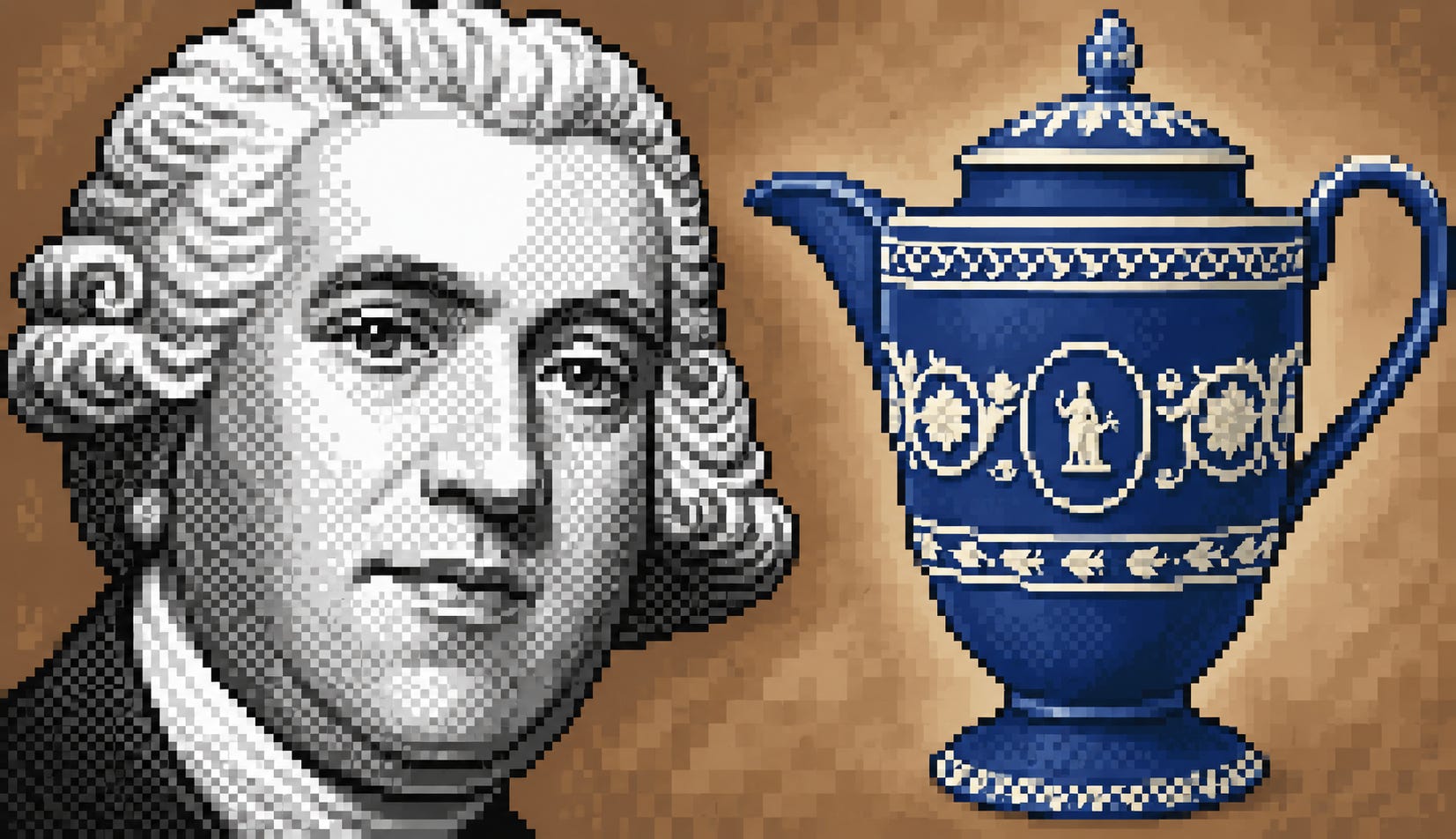
Josiah Wedgwood died in 1795 with one of the most famous brands in Europe and around £600,000 in the bank. That's comfortably north of $100 million today, made out of clay dug up in Staffordshire.
I went down a Wedgwood hole this week. Deeper than planned. And there are some proper Quick Growth Ideas buried in how he sold and how he launched.
Let me show you.
👑 One customer was worth more than a thousand
In 1765 an order came down from St James's Palace. A cream-coloured tea set for Queen Charlotte.
Wedgwood made it, sent it off, and then did the bit that mattered.
He asked for permission to call himself "Potter to Her Majesty". Got it and…
Put it on his invoices
Put it on the showroom sign.
Renamed the whole product line "Queen's Ware".
And mentioned the Queen in his newspaper ads, because who was going to stop him?

The palace didn't pay him a fortune for that tea set.
Didn't matter. One order turned into a permanent line on the letterhead, and every family in Britain with a bit of money and something to prove wanted the same plates the palace ate off.
👉 Your move: You've got one client whose name people recognise. Right now it's probably buried on page four of a case study. Message them: "Would you be happy for me to mention we've worked together?" Most say yes. Then write it as a title, not a footnote: "The copywriter behind [Client]'s launch that generated XYZ." Put it in your headline, email signature, next proposal, and more!
❌ He removed every reason to say no
Here's what Wedgwood was offering customers in the 1770s:
Free carriage of his goods anywhere in the country.
Free replacement of anything that broke on the way.
Your money back if you didn't like it.
In the 1770s. When “delivery” meant a crate of pottery on the back of a cart on a dirt road, and a fair bit of it arrived in pieces.
Look at it from the buyer’s side. Why would you order plates from a factory 150 miles away?
What if it breaks?
What if I don’t like it?
What’s the carriage going to cost me?
Wedgwood answered every objection before it was asked, and made the answer part of the product.
👉 The lesson: Write down why the last three prospects went quiet on you. Not the polite reason, the real one. "What if I don't like it?" "What if it's late?" Now put the answer on your sales page and in the proposal before they have to ask. An objection you've already answered doesn't come up on the call.
🎟️ He sold tickets to look at someone else's dinner plates
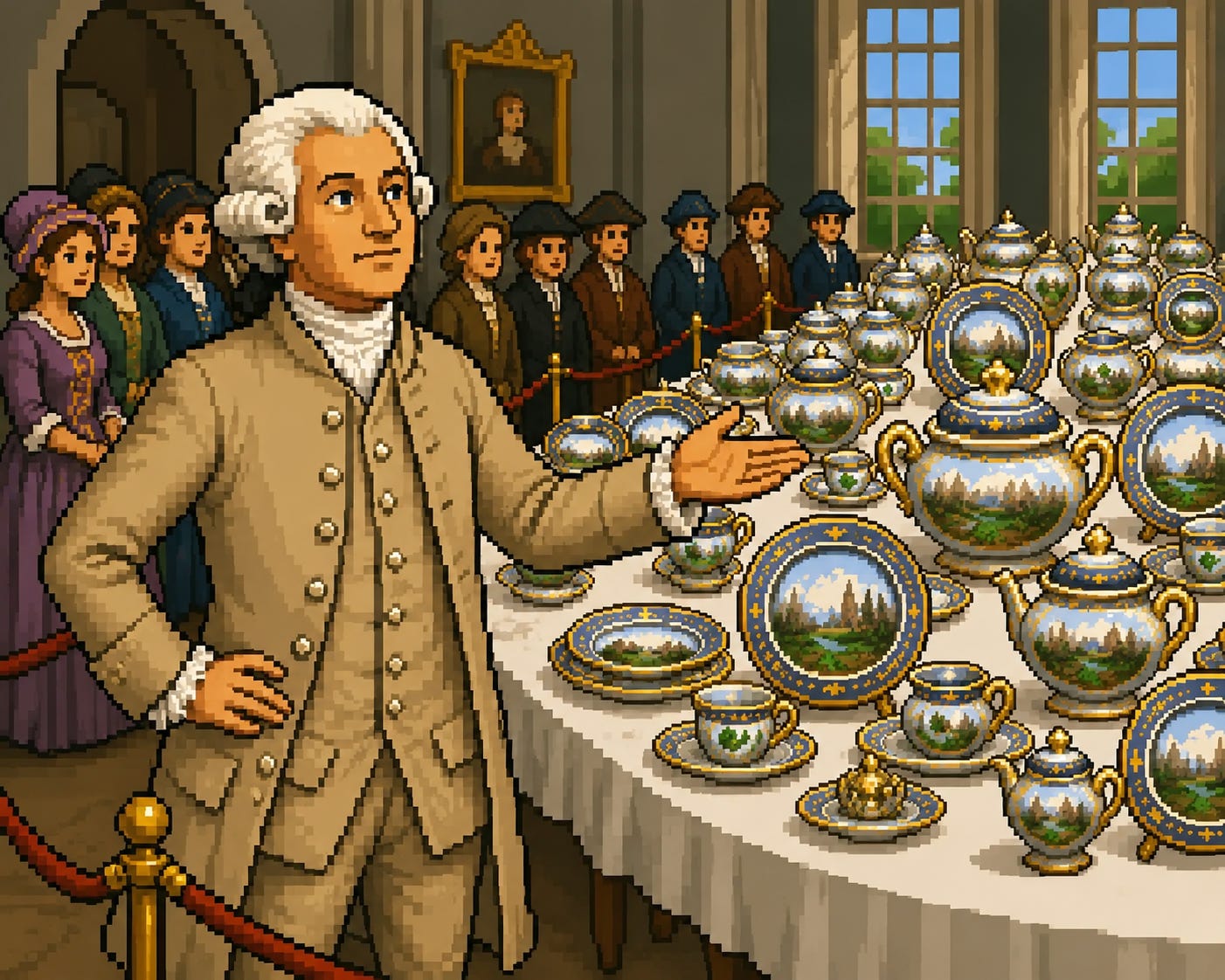
In 1773 Catherine the Great ordered a dinner and dessert service. 50 settings. Roughly 950 pieces. Every single one hand-painted with a different landscape.
By most accounts Wedgwood made little or no money on it. Might even have lost some.
But before a single crate went to Russia, he laid the whole lot out across five rooms of his showroom on Greek Street in Soho, set the tables as if dinner was about to be served, and opened the doors in June 1774.
You needed a ticket to look at plates you couldn’t buy, on their way to a woman you’d never meet…
High society in London queued anyway.
👉 The lesson: Next time you land the big one, negotiate the right to show it while you're building it. A build-in-public thread. A teardown of the brief once it's live. Wedgwood didn't need Catherine to write him a testimonial. The queue on Greek Street was the testimonial.
💡 Your Friday takeaway
Wedgwood has been dead 231 years and people still queue to look at his plates behind glass in museums.
Now you have three quick growth ideas he used. Pick the one that’s cheapest for you to try this week (probably the client-name one, it’s a single email) and do it before Monday.
TL;DR: Josiah Wedgwood (1730–1795) turned a royal order into a product name, killed every objection with free delivery and a money-back guarantee, and sold tickets to see his biggest job before it shipped. All three still work for a one-person business in 2026.
See you next week 🚀
Sam
—If you enjoyed this issue, please tap the Like button below 💙 Thank you!