


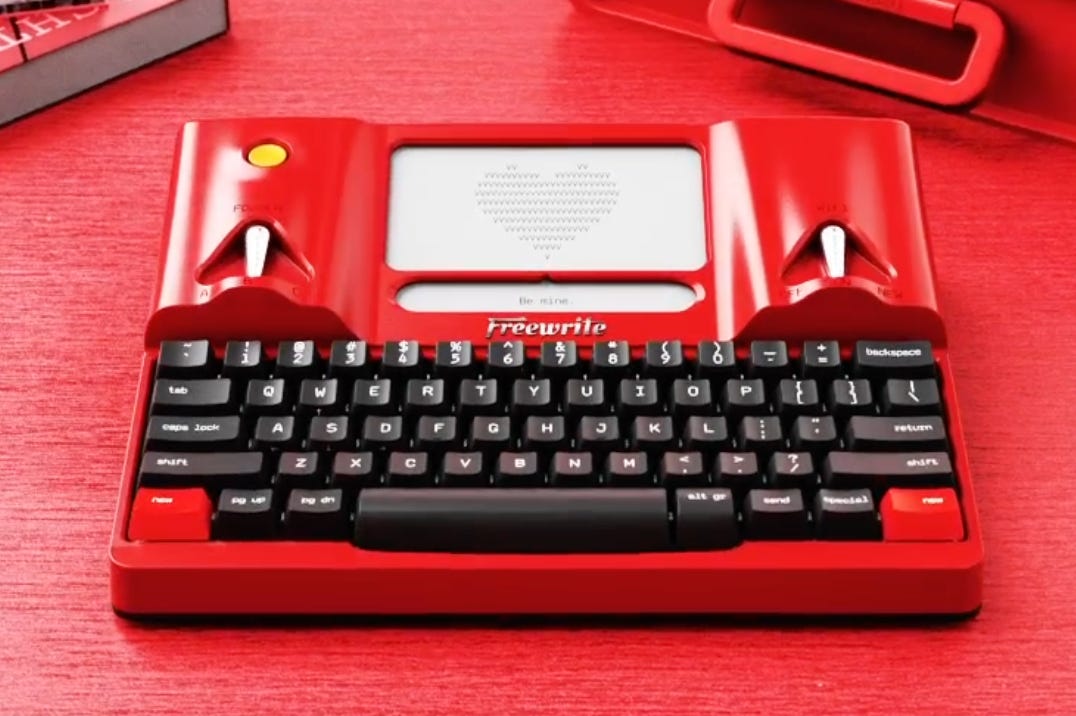
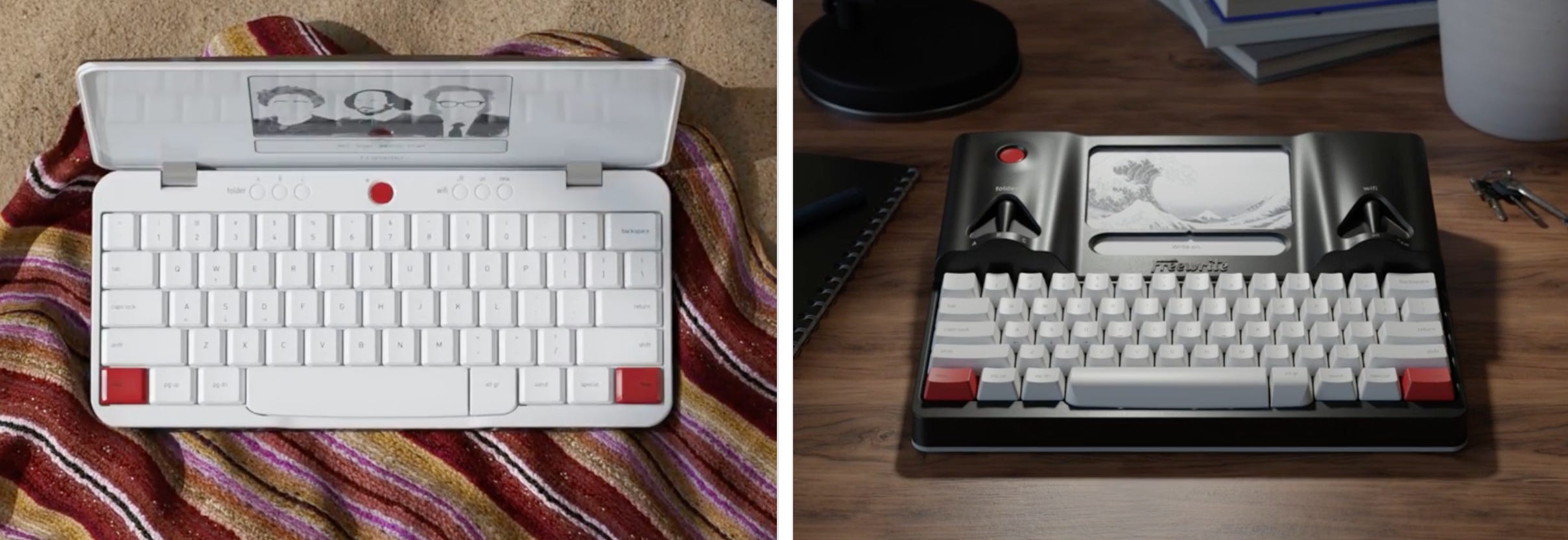
Freewrite makes products that can’t browse the web, can’t run apps, and can’t check email.
They’re E Ink keyboards with one purpose: typing words.
And they’re not cheap.
We’re talking $500+ for what looks like deliberately crippled technology.
But writers are lining up to buy them.
Russell Brunson won’t write books without one, and the Freewrite community has typed over 611 million words.
Freewrite’s goal isn’t to compete with laptops.
They’re competing with the distraction epidemic and winning by removing features.
Here’s what freelancers and solopreneurs can steal from this.
🧠 The problem nobody admits they have
You open your laptop. Start typing.
Remember you need to fact-check something. Open a tab. See an email notification. Click it. Respond.
Return to your doc. Realise you’re hungry. Check your phone.
Forty minutes gone. Three sentences written.
Russell Brunson calls it “right brain/left brain ping-pong.”
Your creative brain wants to flow. Your analytical brain wants to edit. The internet gives you infinite ways to avoid both.
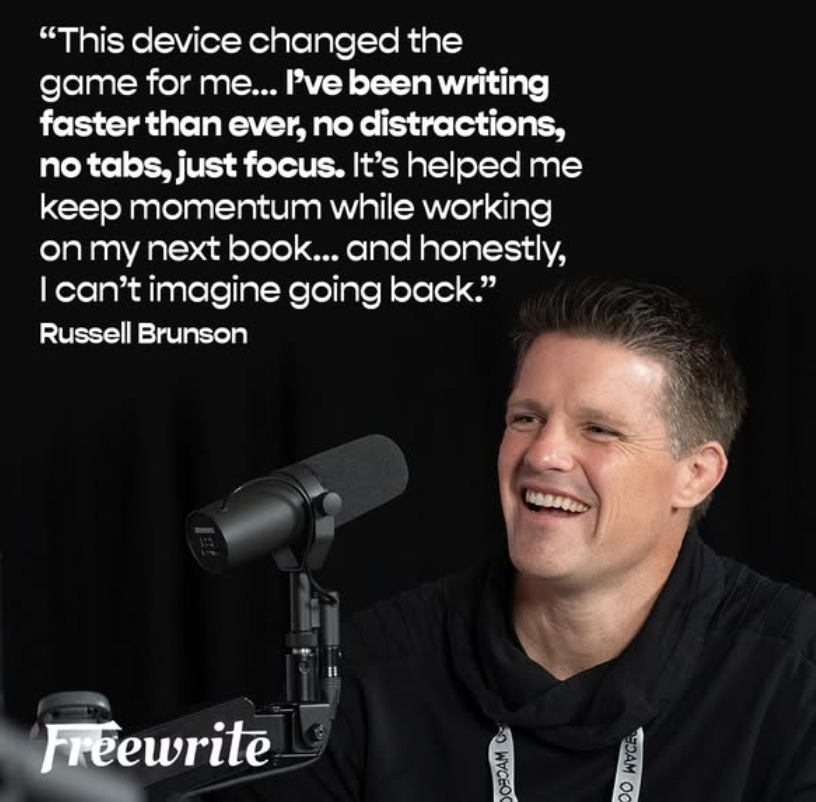
Freewrite forces you to just write.
When you’re done, it syncs with a 3rd-party document (no open internet access required).
Users report writing 2-3x more words per hour using these distraction-free devices.
👉 What solopreneurs can steal from this
Most of us think we grow by adding more.
More services. More platforms. More “I can do that too.”
Freewrite did the opposite.
They took a computer and surgically removed everything except the keyboard.
Then charged more for the subtraction.
When you offer “website copy, emails, social posts, landing pages, and blogs,” clients see you as interchangeable.
You’re competing with 50,000 other generalists.
But when you say “I only write SaaS educational email courses”, you’re not competing with everyone anymore.
You’re the specialist they’ve been looking for who:
🎮 Turn boring specs into a story
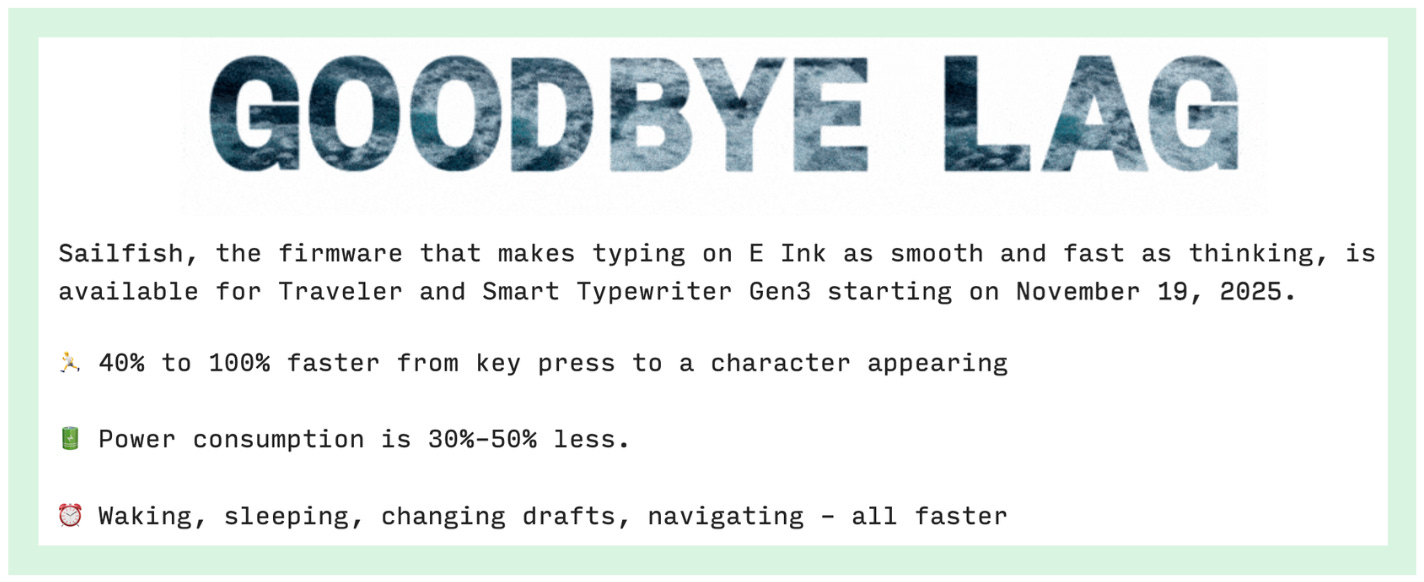
Freewrite’s new firmware update could’ve been announced like every other tech company: “Version 2.3 - Performance Improvements.”
Instead, they called it Sailfish.
They also named their special editions:
Hemingwrite Signature Edition (channels Hemingway’s legacy)
Valentine Special Edition (designed to “fall in love with writing again”)
👉 Stop describing what you do in generic terms
Compare these:
“I’ll optimise your email sequence” vs “Your subscribers will look forward to Tuesdays”
“I provide business coaching” vs “You’ll finally stop second-guessing every decision at 2am”
Clients don’t buy deliverables.
They buy the end of a problem or the beginning of a feeling.
Freewrite knows writers don’t want a keyboard. They want to remember WHY they started writing in the first place.
What feeling are your clients paying for?
💡 Your Friday takeaway
Five ways you can apply the building blocks behind Freewrite:
1. 🔍 Audit what you offer. What can you remove that clients don’t need?
2. 🎯 Name your constraint. “I only do X” becomes your advantage, not your limitation.
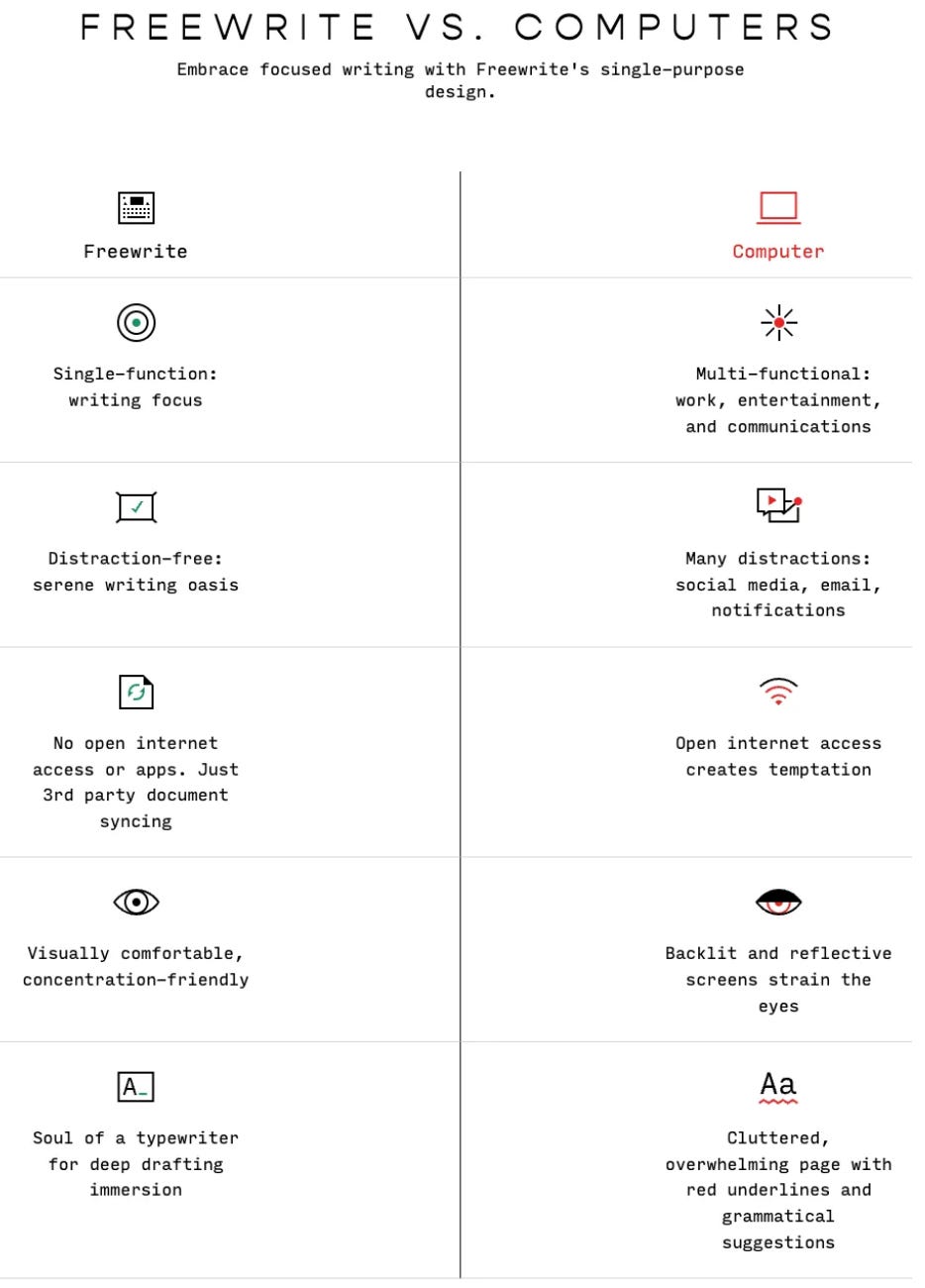
3. ⚖️ Show the compromise. Make a comparison showing what trade-offs your competitors force. Then show how you eliminate it.
4. 🎨 Build sensory language. Speed isn’t “fast delivery.” It’s “momentum you’ll feel tomorrow morning.”
5. 🚪 Create a gateway. Let people taste your approach at 10% of the price before they commit.
See you next week 🚀
Sam
—If you enjoyed issue #24, please tap the Like button below 💙 Thank you!
As the world gets more and more complex, we crave more and more simplicity.
Your article reminds me of luxury stores. When you walk into them they are spread out, minimal, and most importantly curated. High net worth individuals high experts to do the work of sorting and filtering.
The question that comes to mind, am I curating value?