

Welcome to Quick Growth Ideas. Your weekly non-BS briefing on AI search. See what changed, learn what's working, and get new ideas to steal. Let’s go.
Industry news
🗞️ AI search stories that matter this week
🛒 Ask YouTube is becoming a shopping assistant. At Made on YouTube, the company said product review searches in Ask YouTube may return organised video recommendations, including a comparison table of product attributes. Viewers can keep asking questions on the video’s page, or by voice on TV. More than 140 million people have used Ask YouTube, up over 500% since December.

📉 ChatGPT’s share of US AI prompts fell from 70% to 50% in six months. Gemini climbed from 17% to 30% and Claude from 2% to 11% between January and June, according to Comscore’s Q2 AI Intelligence Report. ChatGPT is still the biggest, with 168 million desktop conversations in June. Google showed an AI Overview on 39.4% of desktop searches that month. Focus on only ChatGPT, and you’re watching half the market.
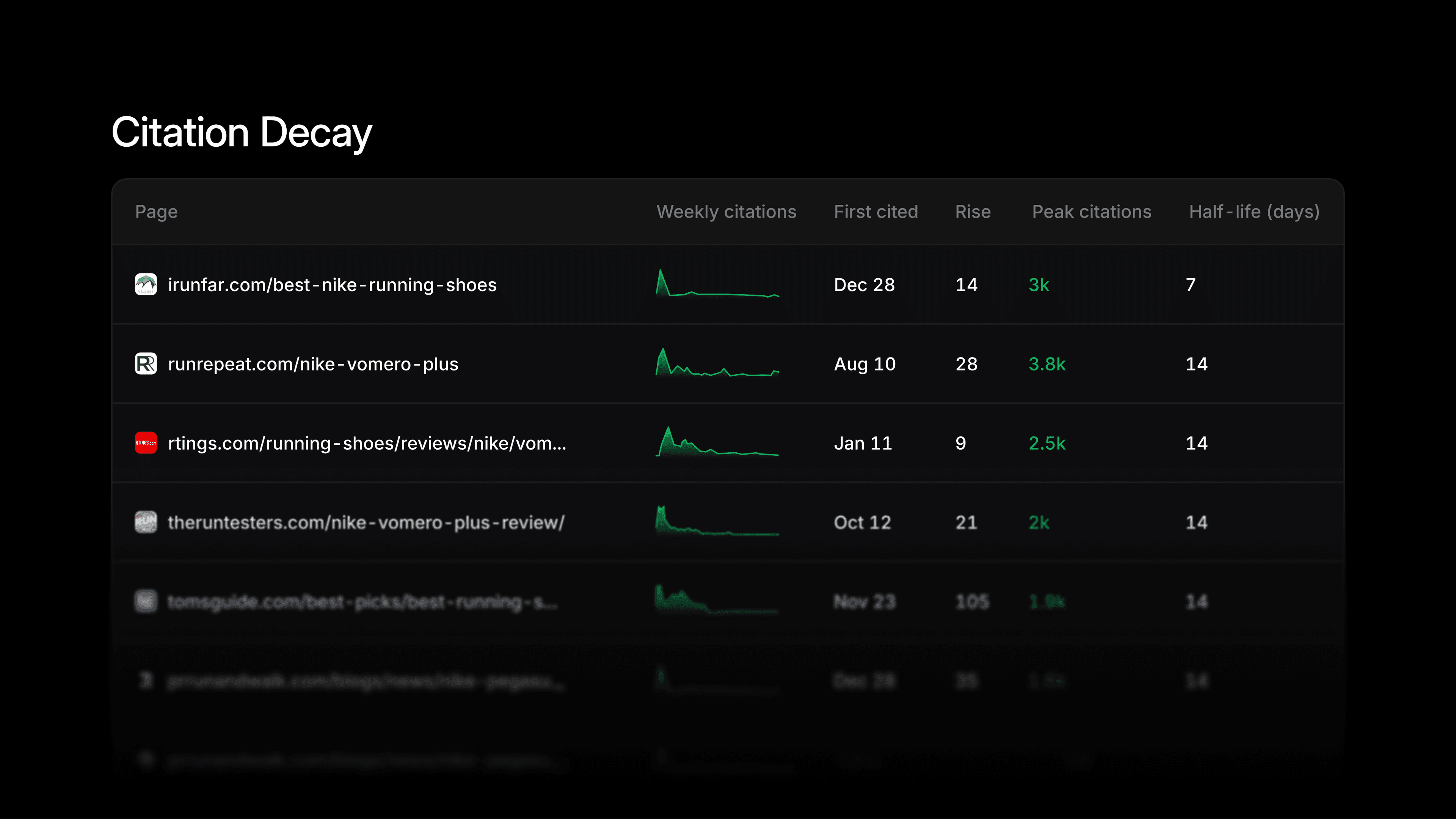
⏳ Profound puts a shelf life on every AI citation. Its new Citation Decay view tracks every page AI cites: when it was first cited, when it peaked and how fast it dropped. Profound says half the pages AI cites are less than 13 weeks old. In its study of 883,000 pages, the typical page was cited half as often 11 days after its peak. It's live for Profound customers.
🖱️ The click rate on ChatGPT ads has doubled since launch. Graphite and Similarweb studied more than 98,000 ads and 8,000 landing pages. Half of the top 10 advertisers run more ads on ChatGPT than on Meta, and the leading ones write 98% new copy for it. Ads get the most clicks in the first few messages of a chat. Graphite still says to treat them as a small test.
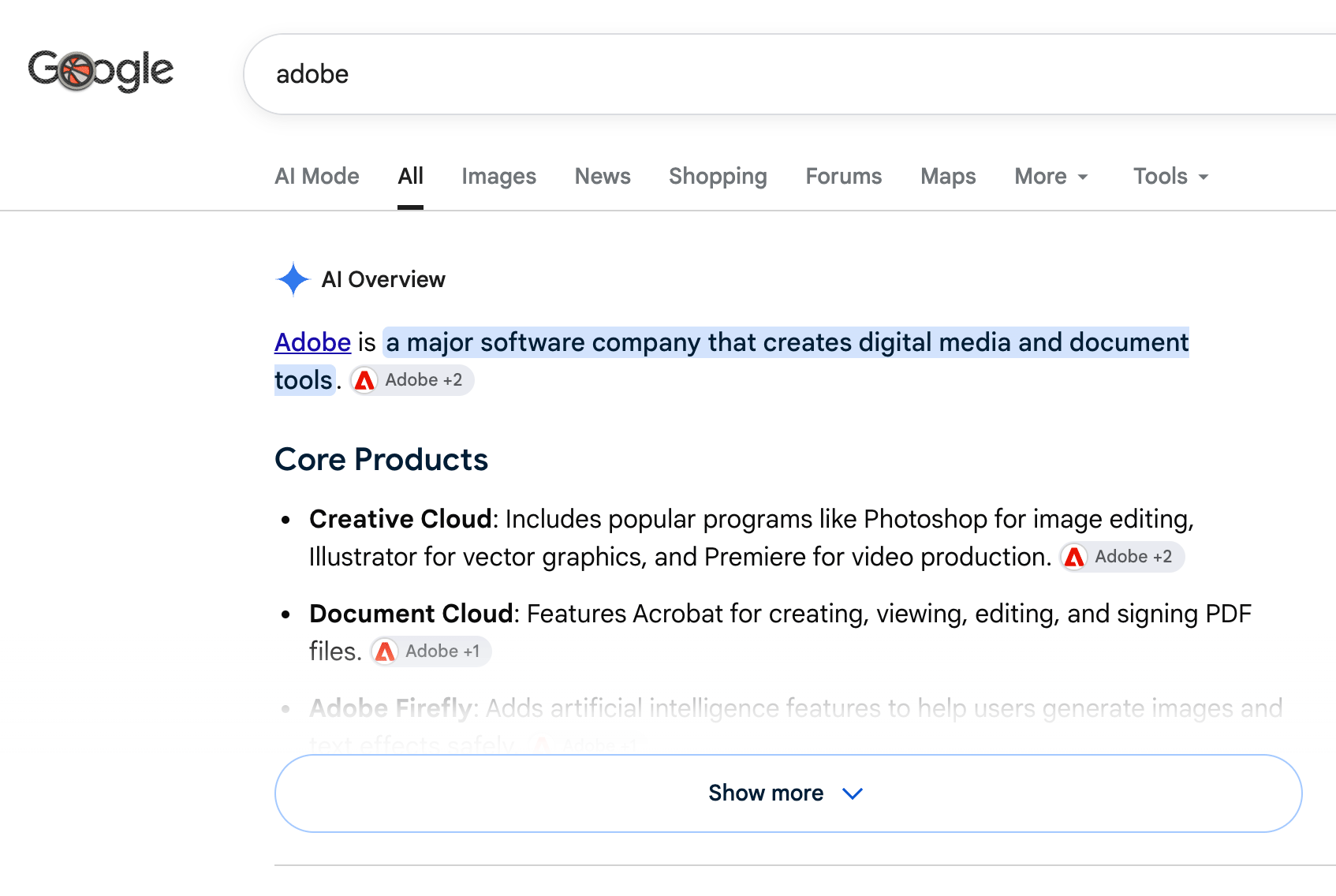
🔎 Google now shows an AI Overview on most big-brand searches. Chris Long tested roughly 100 large brand names, including Reddit, Salesforce, Amazon and Adobe, and found an AI Overview on 93% of them. Most sit mid-page, below the brand’s own listing. DemandSphere’s daily tracking has branded searches with an Overview rising from 26% on 1 September to 82% by the 29th. Search your brand name and read what Google wrote.
Mention worthy
🛋️ Wayfair is testing an ad you can chat with
Click most ChatGPT ads and you land on a web page. Click Wayfair's new one and you start chatting with Wayfair's own AI.
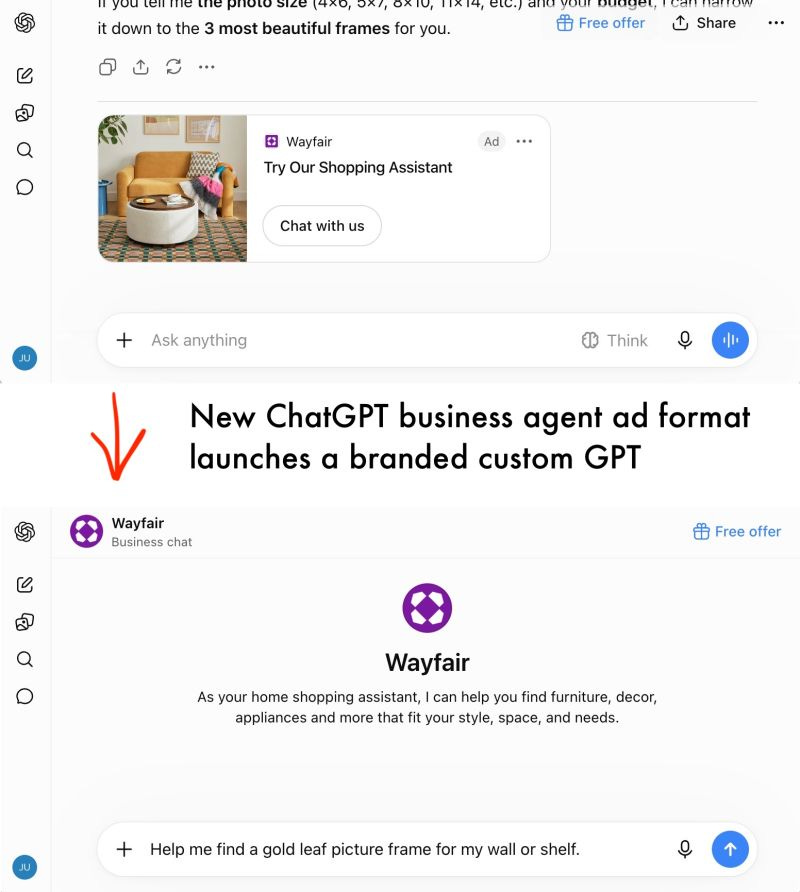
On 16 September, OpenAI announced Sponsored Agents, a test with select US advertisers. A shopper sees an ad, taps a button such as “Chat with us”, and starts a conversation with the brand’s agent. Wayfair confirmed that it’s in a pilot at a limited scale to see whether a conversation helps customers make better-informed decisions. When the shopper is ready, the agent links to the brand’s site.
Why it works
👉 The brand gets a turn in the chat. A normal ad pulls the shopper away from the place where they’re deciding. This one keeps them in ChatGPT, talking to Wayfair by name, while they’re comparing options.
👉 It answers the second question. Nobody stops at “best dining table”. OpenAI’s own example shopper wants to know whether it fits the room, how many it seats and how to care for the finish. The brand with those answers ready is the one the shopper buys from.
👉 It runs on product facts. Wayfair says its test has checks on product accuracy. Shopify sellers can already run ChatGPT ads from an app that pulls their products in from Shopify’s catalogue. If a size or price is wrong in your product data, the agent repeats it to the customer mid-conversation.
💡 Steal this: the follow-up page
Sponsored Agents are invite-only, but the idea is free. After “who should I hire?”, buyers ask ChatGPT about price, timing and what’s included. If a page on your website doesn’t answer, ChatGPT uses a page that does.
So pick one service and list ten questions buyers ask before paying. Answer each in two sentences. Publish them as a Q&A on the service page. It gives AI something specific to quote, and it’s your agent’s script for when OpenAI opens up this format.
Buzzwords of the week
🗣️ Sponsored Agents
You ask ChatGPT for a sofa under $800 that fits a small flat. Under its answer sits an ad with a “Chat with us” button.
Sponsored Agents are ads that open a chat with a brand’s own AI. The chat is labelled as sponsored and runs in its own thread, separate from the answer ChatGPT gave you.
The name is OpenAI’s, and it’s about two weeks old.
💡My take: learn the term, but don't spend on it yet. A Sponsored Agent buys you a chat with the shopper. It doesn't change what ChatGPT recommends in its own answer. You can't pay to be named there, so work on that first.
Steal this playbook
📘 OtterlyAI’s September AI Search Index
OtterlyAI’s Rick Tousseyn published The September Update: The Month AI Search Stopped Agreeing About Social. It’s built on 1,600 prompts across 16 US industries, run every day on seven AI engines.
Three bits worth stealing:
👉 Pick the engine before the platform. LinkedIn was cited 39% more often on 20 September than on the 1st, led by ChatGPT (up 66%), Google AI Mode (up 62%) and Perplexity (up 51%). On Google AI Overviews it fell 13%, and Gemini didn’t cite LinkedIn once.
👉 Treat Reddit as a Google channel. AI Overviews and AI Mode each give Reddit about 5% of their citations. Claude never cited it in 77 days of tracking, and ChatGPT’s use of Reddit is down 94% since July.
👉 Don’t count on YouTube alone. Its share fell 42% in the same three weeks, almost entirely because Google AI Mode cut YouTube from 13.5% of its citations to 3.9%. AI Overviews is the only engine still citing it in any volume.
Before the bots
🚗 How a tyre company ended up rating the world's restaurants
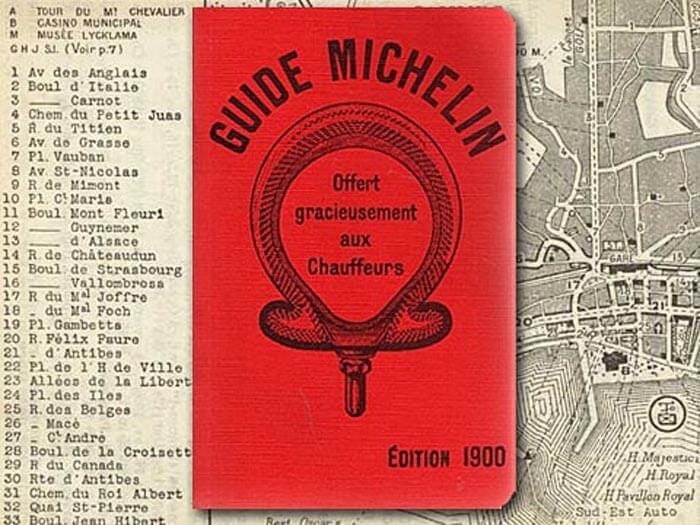
In 1900, France had fewer than 3,000 cars, and brothers André and Édouard Michelin had tyres to sell. They printed about 35,000 copies of a free handbook for drivers, with maps, puncture repairs, petrol stops, hotels and places to eat. More miles meant more worn-out tyres.
For 20 years they gave it away. Then, André found copies propping up a workbench in a tyre shop. He decided that "man only truly respects what he pays for". So the 1920 edition went on sale for seven francs, with the paid adverts taken out.
The restaurant pages had become the popular part, so Michelin recruited anonymous inspectors. A single star arrived in 1926 and the one-to-three scale in 1931. In 1936 it published what the stars meant: two for cooking worth a detour, three for cooking worth a special journey.
CNN’s history of the guide says there’s no evidence it ever increased tyre sales. It became a business in its own right, with more than 30 million copies sold and over 30,000 restaurants covered.
💡 The lesson for 2026: Michelin took the adverts out, published its rules and judged something its customers cared about. The name became the standard other people quote.
AI tools face the same problem as a driver in 1920, with too many options and no time to test them. When someone asks ChatGPT “what’s the best invoicing app for a freelancer?”, it leans on sources that have already done the judging, such as review sites, comparison tables and rankings with clear criteria.
👉 Your move: pick something your customers have to choose but you don’t sell. If you build websites for dentists, rate the booking systems they pick between. Publish three criteria, test each one the same way and update it every year.
See you next week 🚀
Sam
- If you enjoyed issue #33, please tap the Like button below 💙 Thank you!
P.S. Want to know what ChatGPT says about your business? Reply to this email (or drop a comment). I’ll tell you if AI recommends you, who it recommends instead, and one thing to fix. It’s the first step of The Mention Method, my process for getting brands named in AI answers.