


Welcome to the new Quick Growth Ideas. Your weekly non-BS briefing on AI search. See what changed, learn what's working, and get new ideas to steal. Let’s go.
Industry news
🗞️ AI search stories that matter this week
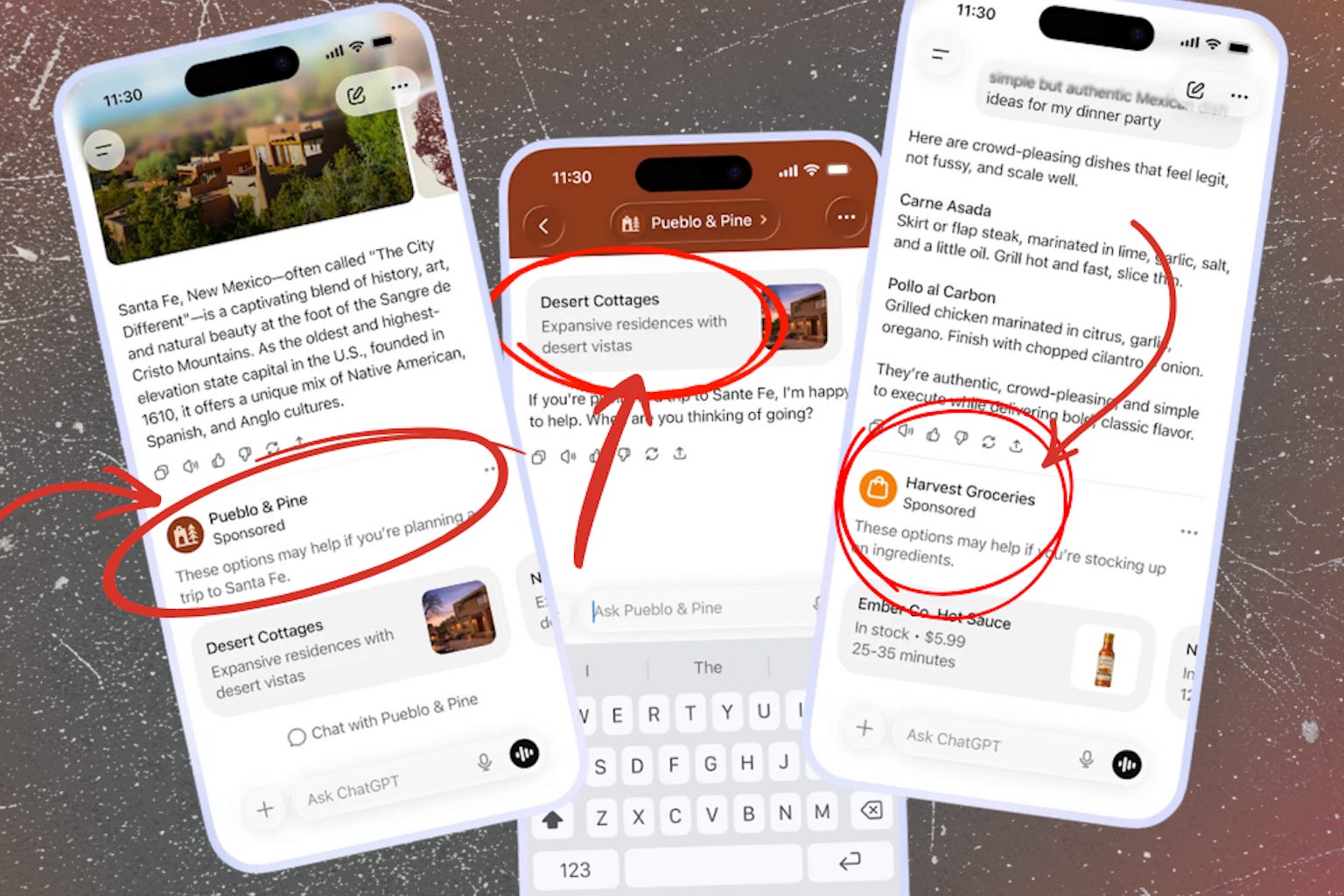
💰 ChatGPT ads hit $1bn in under 200 days. Tens of thousands of advertisers are already buying ads on ChatGPT, and brands in India, Europe, the Middle East and North Africa can buy placements directly. Ads sit beneath ChatGPT's answers, in front of 900 million weekly users. Amazon has already started selling that space to advertisers through its own ad platform.
📉 Google admits “position 1–10” doesn’t mean what it used to. Asked how Search Console counts AI Overviews, Google’s John Mueller said the old position 1–10 has become hard to map or make useful. Every link inside an AI Overview gets the Overview’s position, not its own.
🦄 Profound raises $180M to track who AI recommends. AI visibility platform Profound raised $180 million at a $1.8 billion valuation. That's less than seven months after its $96 million Series C. It serves more than 1,000 enterprise brands, including over a third of the Fortune 100. In other words, "does ChatGPT mention us?" is now a boardroom question.
💬 ChatGPT ads can now talk back. OpenAI is testing Sponsored Agents with select US advertisers. Click an ad and you can open a labelled chat with the brand's own agent, ask questions, then visit its site. It arrives with HubSpot and Shopify integrations. Your ad just became a salesperson, so it had better know your product.
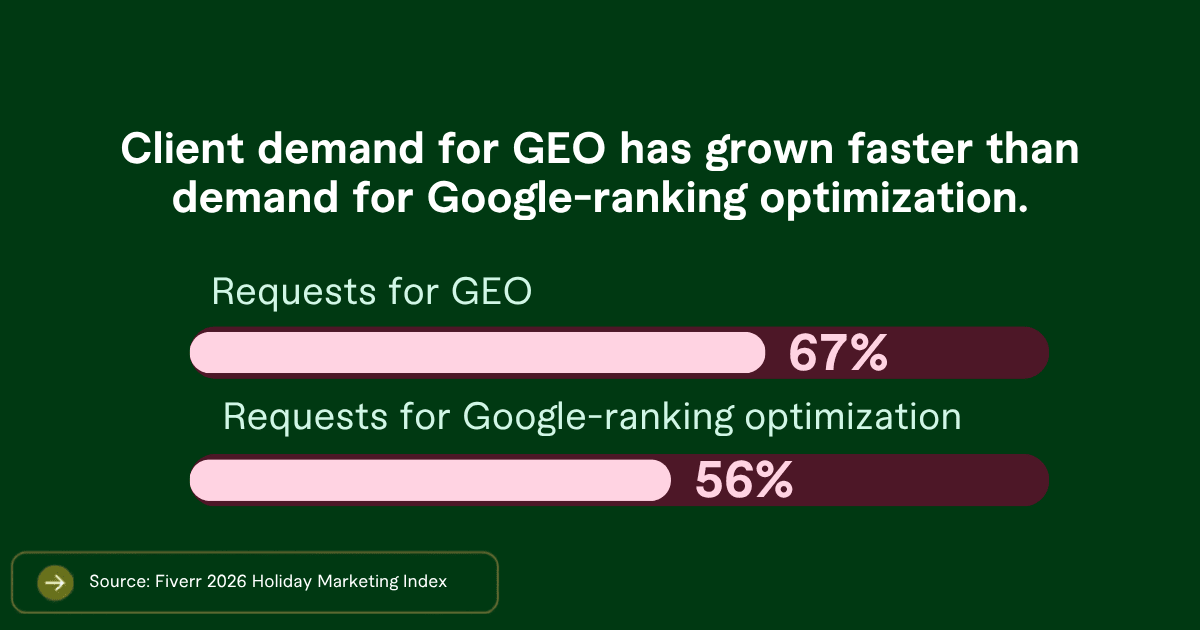
📈 GEO is the hot new service. In Fiverr's 2026 Holiday Marketing Index, 67% of freelance search specialists report rising demand for GEO, compared with 56% for traditional rankings. 83% say clients now want strategy over execution. The advice: invest in both rather than choose.
Mention worthy
🎙️ John Lewis made a chat show. The audience is a chatbot.
Most brands are rewriting product pages to get into ChatGPT's answers. John Lewis went another way and hired a TV presenter.
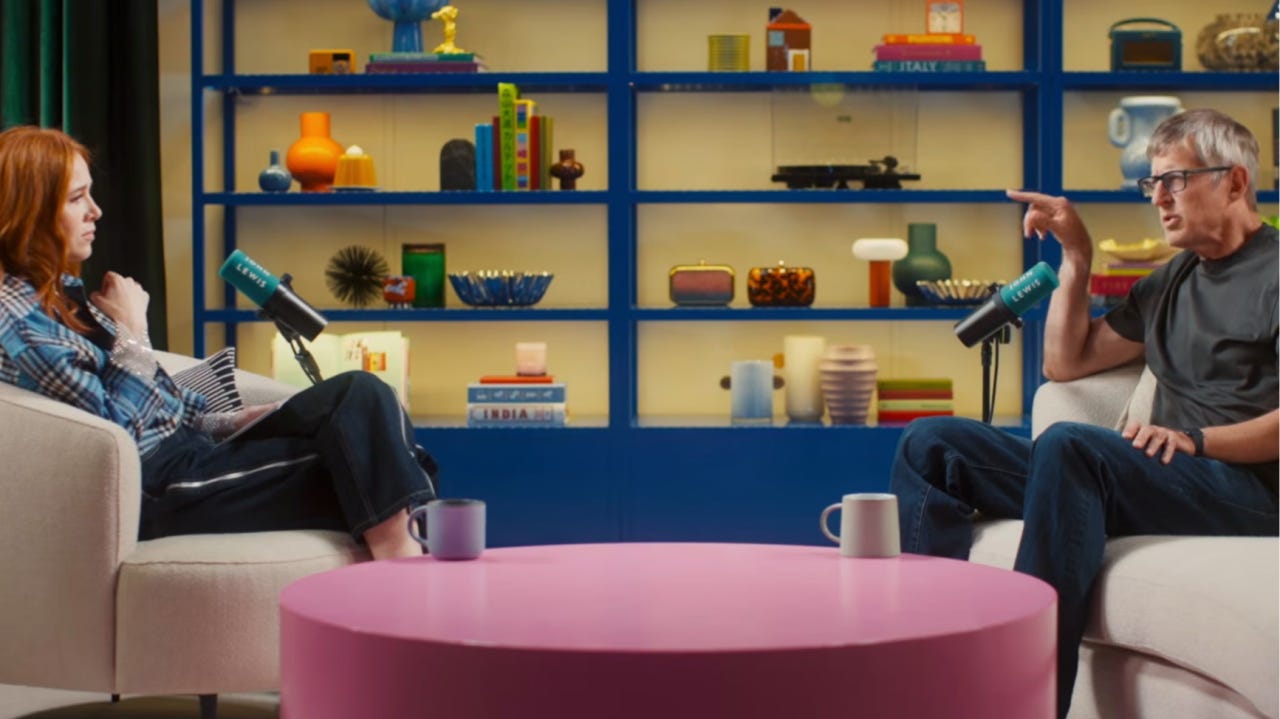
The department store is launching a YouTube “vodcast” called Gift List, hosted by Angela Scanlon, along with a social media studio. The stated aim is to make John Lewis more visible to chatbots and more prominent in AI search results. Louis Theroux is the first guest, and six episodes run up to Christmas.
A year ago, 0.3% of John Lewis customers searched for products through tools like ChatGPT. Today it’s 2.5%.
Why it works
👉 It creates third-party voices. AI models tend to prioritise third-party advice and live content when they build an answer. When guests talk about gifts, that counts as other people talking. It isn’t John Lewis talking about John Lewis.
👉 It never goes stale. The studio lets them respond within days to a live cultural moment, for example by filming around the Bayeux tapestry exhibition at the British Museum. Six episodes plus a clip machine means a steady supply of new material for AI models to find.
👉 It lives where the models look. An analysis of 46 million citations found YouTube accounts for 23.3% of AI Overview citations. John Lewis chose one of the platforms AI reads most.
💡 Steal this: the 20-minute guest chat
You don’t need to hire Louis Theroux. You need someone who isn’t you, talking about a question your buyers ask AI.
Once a month, record 20 minutes with a client or a respected peer. Title the video with the question, for example “How much should a brand identity cost in 2026?” Post it to YouTube, cut three clips, and put the transcript on your site.
It costs nothing, and you end up with three new sources that mention you.
Buzzwords of the week
🗣️ SEO vs AEO vs GEO
Think of them as three ways to win at a party.
SEO (Search Engine Optimisation) gets your name on the guest list. You rank in the blue links, and people choose to click on you.
AEO (Answer Engine Optimisation) makes you the person who answers when someone asks a question out loud. Be the direct answer, not one of ten options.
GEO (Generative Engine Optimisation) makes you the person everyone quotes when they retell the story the next day. You get named and cited inside the answers that ChatGPT, Gemini and Perplexity write.
💡My take: these aren’t three jobs. It’s one job with three scoreboards: clicks, answers and mentions. Don’t let anyone sell you three separate retainers.
Steal this playbook
📘 LinkedIn’s guide to winning AI search
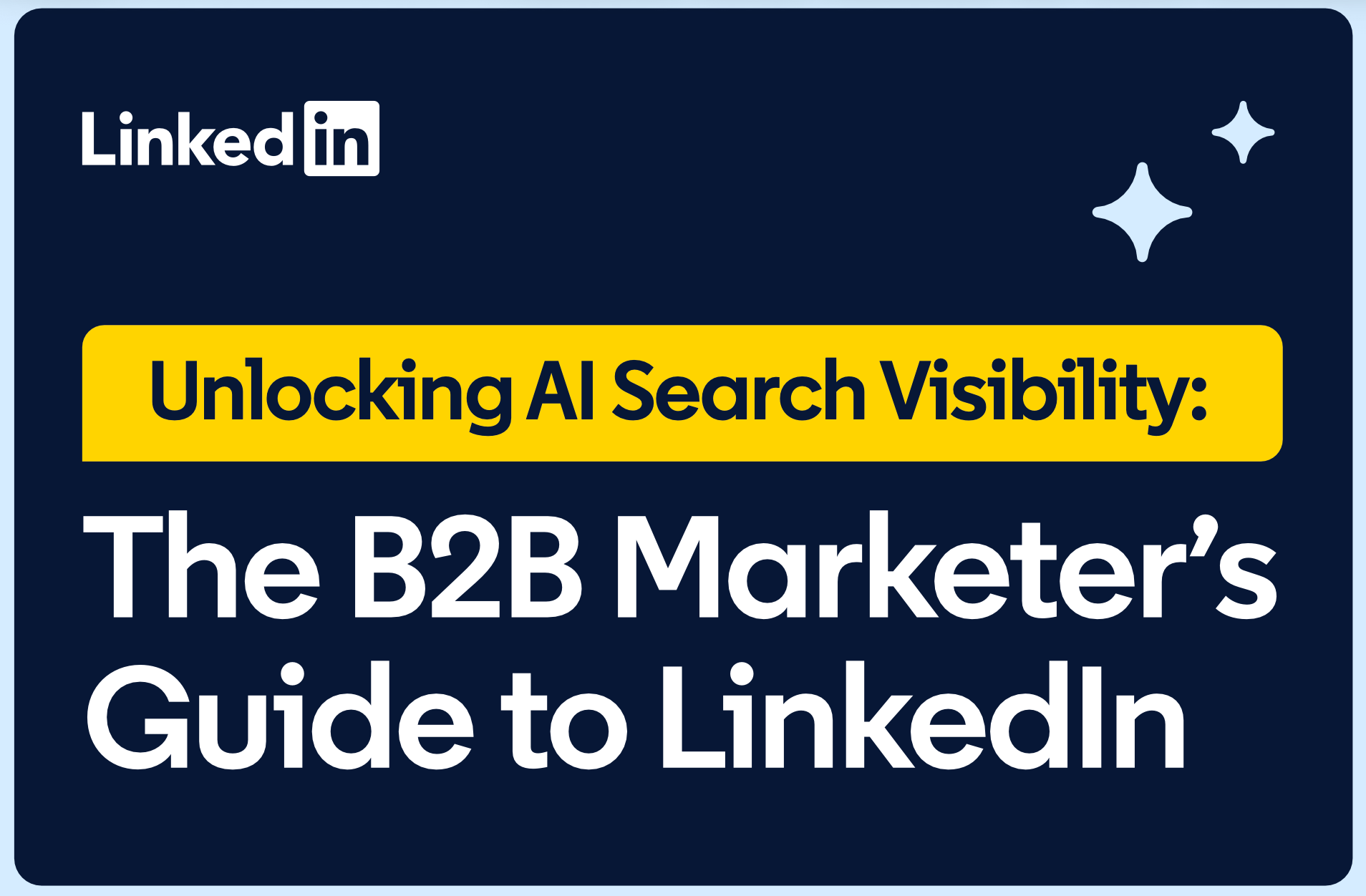
LinkedIn recently published Unlocking AI Search Visibility: The B2B Marketer’s Guide to LinkedIn, written by its VP of Marketing, Davang Shah. It’s built on 18 months of LinkedIn’s own testing.
Three bits worth stealing:
👉 Your profile is a citation asset. The guide cites Meltwater research finding that 75% of LinkedIn’s AI citations came from individual member profiles, not company pages.
👉 Get the whole team saying the same thing. LinkedIn recommends coordinating company content with executives, employees, subject-matter experts, creators and press coverage, so credible sources reinforce the same themes about your brand.
👉 Date it and lead with it. Put specific dates in your posts so AI can tell the information is current, and open with the most important point. LinkedIn’s internal data also suggests posts with 10 or more comments seem to do better.
And the stat that should wake you up: LinkedIn’s own marketing sites have seen non-branded search traffic fall by as much as 60%. If it’s happening to LinkedIn, it’s happening to you.
Before the bots
🍺 How a beer brand built the first answer engine
In November 1951, the managing director of the Guinness Brewery, Sir Hugh Beaver, was on a shooting party in County Wexford, Ireland. The group argued about which was Europe’s fastest game bird. Back home, they couldn’t find a single reference book that could settle it.
Beaver saw the bigger picture. He reckoned the same kind of friendly arguments were happening every night in the 81,400 pubs across Britain and Ireland.
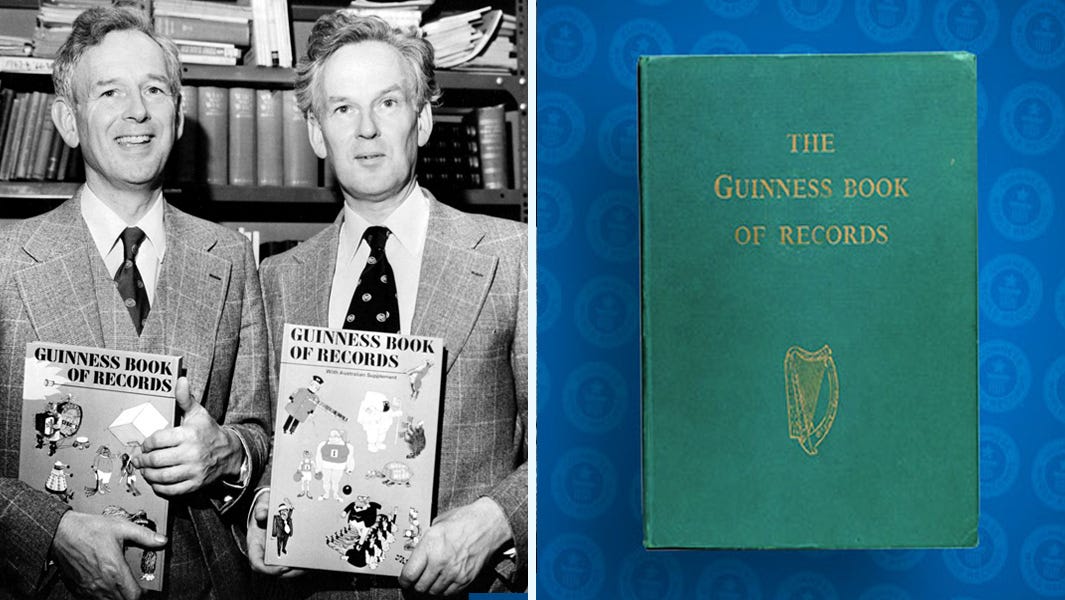
So he hired Norris and Ross McWhirter, twin brothers who ran a fact-finding agency in London. The first Guinness Book of Records came out on 27 August 1955. The first 1,000 copies were laminated against beer spills and given to pubs free as a promotion. They were so popular that Guinness started selling the book, and it was a UK bestseller by Christmas. Now it’s in its 71st year, published in 100 countries and 40 languages.
💡 The lesson for 2026: the book didn’t advertise beer. It became the source that settled the argument, so the Guinness name came up every time someone said “look it up.”
That’s AI search in one sentence. ChatGPT is the new pub, and your customers are arguing in it every night: “Is X better than Y?”, “How much should this cost?”, “Who’s the best at Z?”
👉 Your move: find the question your industry argues about most, publish the definitive answer, and make it the page everyone cites.
See you next week 🚀
Sam
- If you enjoyed issue #32, please tap the Like button below 💙 Thank you!
P.S. Want to know what ChatGPT says about your business? Reply to this email (or drop a comment). I’ll tell you if AI recommends you, who it recommends instead, and one thing to fix. It’s the first step of The Mention Method, the process I’ve developed to get brands named in AI answers.